

Rotec China Office nimmt offiziell den Betrieb auf
Click to view Rotec China Office nimmt offiziell den Betrieb auf
Rotec Munich setzt seinen internationalen Wachstumskurs konsequent fort: Das neue ROTEC China Office hat...

Accurate torsional vibration measurement starts with one thing: capturing tiny fluctuations in rotational speed that are invisible to the naked eye but critical to component life. This page walks through how it's done — from sensor choice to the surprising physics behind measurement resolution.

A rotating shaft under torsional vibration doesn't turn at a perfectly constant speed — it accelerates and decelerates slightly within every revolution, even while the average RPM stays flat. Measuring this means recording rotational speed variations at very high frequency, with sensors that provide multiple samples per shaft revolution. The smaller and faster these fluctuations are, the more samples per revolution — and the more time-resolution — the measurement system needs.
Three sensor types dominate real-world torsional vibration measurement, each with a different trade-off:
Magnetic pickups (pulse-per-revolution / PPR sensors). Popular for their robustness, low cost, and ease of installation. The number of teeth on the target determines the samples per revolution. This sampling density is distinct from the time resolution of the measurement system.
Optical encoders. Using zebra tape or zebra discs, optical encoders can achieve higher pulse rates and finer precision than magnetic pickups — at the cost of sensitivity to dirt, dust, and oil in harsher environments.
Incremental encoders. High-resolution devices that deliver enough data per revolution to support analysis of high-order effects, transmission error analysis, and gear-meshing order identification.
Choosing between them comes down to precision requirements and the environment the sensor has to survive.
Classic NVH measurement is typically time-based. Torsional vibration measurement instead benefits from an angle-based approach, using high-resolution counters operating in the gigahertz range. This delivers highly accurate results and fast FFT processing — largely because the resulting data files are much smaller than equivalent time-based recordings. Angle-based processing also handles artefacts cleanly, such as correcting for butt joints in zebra tape or gear markings (a missing tooth on a 60-1 wheel, for instance, otherwise shows up as a speed drop to roughly half the average value).
Here's a counterintuitive but important point: the angular resolution of a torsional vibration measurement system has almost nothing to do with the number of teeth or markings on the sensor wheel.
At first glance, it seems obvious that a 60-tooth gear wheel (6° angular pitch) should limit resolution to 6°, and a 720-line segment disc should limit it to 0.5°. In reality, the achievable angular resolution is far finer than the angular pitch — because the target wheel is rotating, and the measurement uses a high-resolution time counter rather than simply counting markings.
The angular resolution is determined by:
Δφ_resol = ω̄ × Δt_resol = ω̄ / f_clock
Finer time resolution enables finer calculated angular resolution at a given speed. More markings per revolution increase sampling density; time resolution and the rest of the measurement chain determine the achievable measurement quality. Hardware specifications depend on the system configuration.
It's worth separating two concepts that are easy to confuse: resolution is the smallest difference a system can detect, while accuracy is how close a measurement is to the true value. A 24-bit analogue-to-digital converter, for example, can resolve differences as small as a fraction of a microvolt — but real-world noise, sensor tolerances, and mechanical imperfections mean that level of resolution is rarely matched by equivalent accuracy in practice. The same applies to torsional vibration measurement: extremely fine angular resolution doesn't remove the need for well-manufactured sensor targets and clean signal conditioning.
A typical torsional vibration measurement setup includes:
A speed sensor (magnetic pickup, optical encoder, or incremental encoder) mounted on the shaft
Sensor electronics for signal conditioning
A high-resolution measurement device with a speed input board (operating in the gigahertz range for fine time resolution)
Software for angle-domain processing, order tracking, and FFT analysis
This same angle-based, high-resolution measurement principle extends beyond torsional vibration to related applications like valve lift and valvetrain dynamics, where a similar sensor-and-counter approach captures fast mechanical motion with high precision.
Sensor choice, sampling strategy, and signal processing all affect measurement quality — and the right combination depends heavily on your shaft speed range, environment, and what you need to detect.
Talk to a ROTEC engineer about your torsional vibration measurement setup, browse our torsional vibration sensors, or see how the data is turned into insight on our analysis page.
Resolution is the smallest distinguishable measurement increment. Accuracy describes how close the measurement is to the true value. Sensors, geometry, signal quality and calibration affect practical accuracy.
More markings provide more measurements per revolution. The time resolution of the counter also determines how finely signal-edge timing can be measured. Sampling density and resolution must therefore be considered separately.
A speed sensor, suitable signal conditioning, synchronised data acquisition and software for angle-based analysis. The configuration depends on speed, order range and the operating environment.
Discuss your measurement task, operating conditions and suitable analysis with ROTEC.
Discuss your project →ROTEC KNOWLEDGE
Accurate torsional vibration measurement starts with one thing: capturing tiny fluctuations in rotational speed that are invisible to the naked eye but critical to component life. This page walks through how it's done — from sensor choice to the surprising physics behind measurement resolution.
A rotating shaft under torsional vibration doesn't turn at a perfectly constant speed — it accelerates and decelerates slightly within every revolution, even while the average RPM stays flat. Measuring this means recording rotational speed variations at very high frequency, with sensors that provide multiple samples per shaft revolution. The smaller and faster these fluctuations are, the more samples per revolution — and the more time-resolution — the measurement system needs.
Three sensor types dominate real-world torsional vibration measurement, each with a different trade-off:
Magnetic pickups (pulse-per-revolution / PPR sensors). Popular for their robustness, low cost, and ease of installation. The number of teeth on the target determines the samples per revolution. This sampling density is distinct from the time resolution of the measurement system.
Optical encoders. Using zebra tape or zebra discs, optical encoders can achieve higher pulse rates and finer precision than magnetic pickups — at the cost of sensitivity to dirt, dust, and oil in harsher environments.
Incremental encoders. High-resolution devices that deliver enough data per revolution to support analysis of high-order effects, transmission error analysis, and gear-meshing order identification.
Choosing between them comes down to precision requirements and the environment the sensor has to survive.
Classic NVH measurement is typically time-based. Torsional vibration measurement instead benefits from an angle-based approach, using high-resolution counters operating in the gigahertz range. This delivers highly accurate results and fast FFT processing — largely because the resulting data files are much smaller than equivalent time-based recordings. Angle-based processing also handles artefacts cleanly, such as correcting for butt joints in zebra tape or gear markings (a missing tooth on a 60-1 wheel, for instance, otherwise shows up as a speed drop to roughly half the average value).
Here's a counterintuitive but important point: the angular resolution of a torsional vibration measurement system has almost nothing to do with the number of teeth or markings on the sensor wheel.
At first glance, it seems obvious that a 60-tooth gear wheel (6° angular pitch) should limit resolution to 6°, and a 720-line segment disc should limit it to 0.5°. In reality, the achievable angular resolution is far finer than the angular pitch — because the target wheel is rotating, and the measurement uses a high-resolution time counter rather than simply counting markings.
The angular resolution is determined by:
Δφ_resol = ω̄ × Δt_resol = ω̄ / f_clock
Finer time resolution enables finer calculated angular resolution at a given speed. More markings per revolution increase sampling density; time resolution and the rest of the measurement chain determine the achievable measurement quality. Hardware specifications depend on the system configuration.
It's worth separating two concepts that are easy to confuse: resolution is the smallest difference a system can detect, while accuracy is how close a measurement is to the true value. A 24-bit analogue-to-digital converter, for example, can resolve differences as small as a fraction of a microvolt — but real-world noise, sensor tolerances, and mechanical imperfections mean that level of resolution is rarely matched by equivalent accuracy in practice. The same applies to torsional vibration measurement: extremely fine angular resolution doesn't remove the need for well-manufactured sensor targets and clean signal conditioning.
A typical torsional vibration measurement setup includes:
A speed sensor (magnetic pickup, optical encoder, or incremental encoder) mounted on the shaft
Sensor electronics for signal conditioning
A high-resolution measurement device with a speed input board (operating in the gigahertz range for fine time resolution)
Software for angle-domain processing, order tracking, and FFT analysis
This same angle-based, high-resolution measurement principle extends beyond torsional vibration to related applications like valve lift and valvetrain dynamics, where a similar sensor-and-counter approach captures fast mechanical motion with high precision.
Sensor choice, sampling strategy, and signal processing all affect measurement quality — and the right combination depends heavily on your shaft speed range, environment, and what you need to detect.
Talk to a ROTEC engineer about your torsional vibration measurement setup, browse our torsional vibration sensors, or see how the data is turned into insight on our analysis page.
Resolution is the smallest distinguishable measurement increment. Accuracy describes how close the measurement is to the true value. Sensors, geometry, signal quality and calibration affect practical accuracy.
More markings provide more measurements per revolution. The time resolution of the counter also determines how finely signal-edge timing can be measured. Sampling density and resolution must therefore be considered separately.
A speed sensor, suitable signal conditioning, synchronised data acquisition and software for angle-based analysis. The configuration depends on speed, order range and the operating environment.
Discuss your measurement task, operating conditions and suitable analysis with ROTEC.
Discuss your project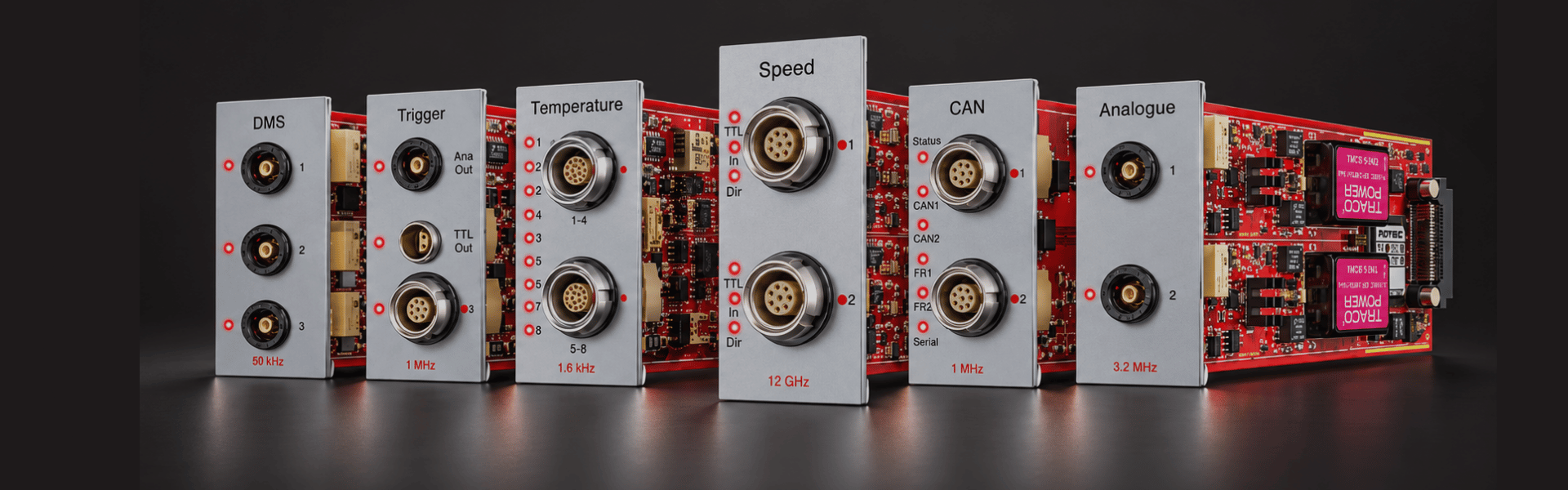






Präzise Ergebnisse entstehen durch das Zusammenspiel von Sensorik, Signalaufbereitung, Datenerfassung, Analyse und technischem Systemverständnis.
Steuertrieb, Nebenaggregate, Kupplung und Dämpfer, Getriebe sowie Ventildynamik werden gezielt analysiert, um das dynamische Verhalten des Verbrennungsmotors ganzheitlich zu verstehen.


Präzise Ergebnisse entstehen durch das Zusammenspiel von Sensorik, Signalaufbereitung, Datenerfassung, Analyse und technischem Systemverständnis.