Laser sensor
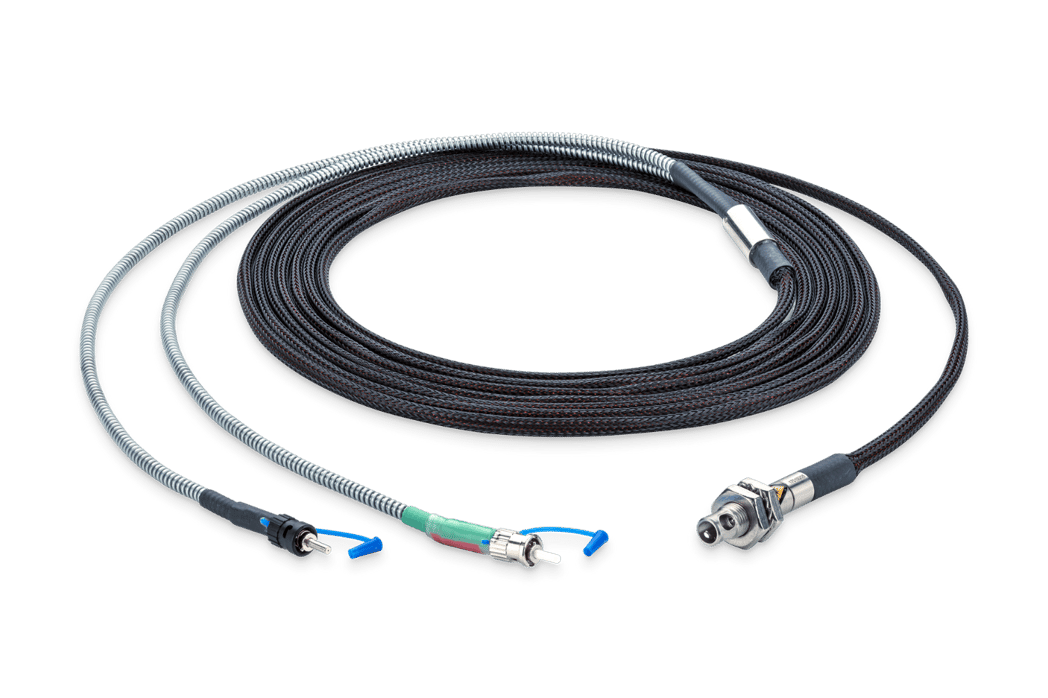
The laser sensors are used for optical measurement of the rotational frequency or speed of rotating machine parts. A line pattern is scanned using the reflection method. Reticle discs and strips are available in various dimensions.

ROTEC MEASUREMENT TECHNOLOGY
Laser sensors scan a black-and-white grating pattern on rotating components. The measurement chain links optical detection, TTL signal conditioning and angle-based analysis.
The laser sensors are used for optical measurement of the rotational frequency or speed of rotating machine parts. A line pattern is scanned using the reflection method. Reticle discs and strips are available in various dimensions.
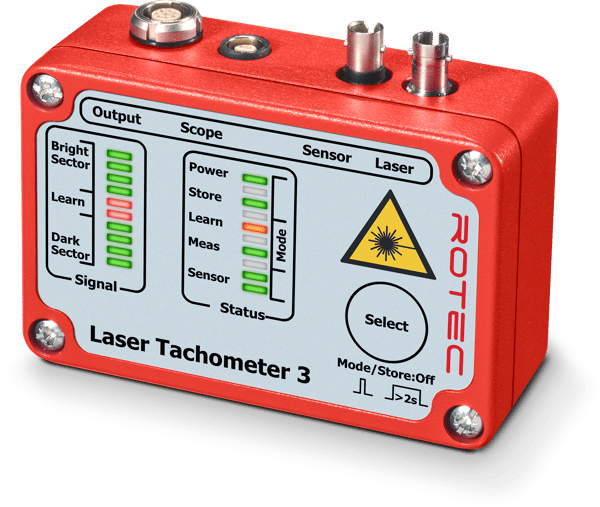
The Laser Tachometer 3 (ElLas3) converts the signal from the ROTEC laser sensor into a pulse sequence with TTL level, which can then be processed by the RASdelta speed measurement card. The automatic teach-in function and coloured LEDs make operation easier.

The RASdelta speed card records digital pulses and stores timestamps for subsequent angle-based analysis in RAS Software.
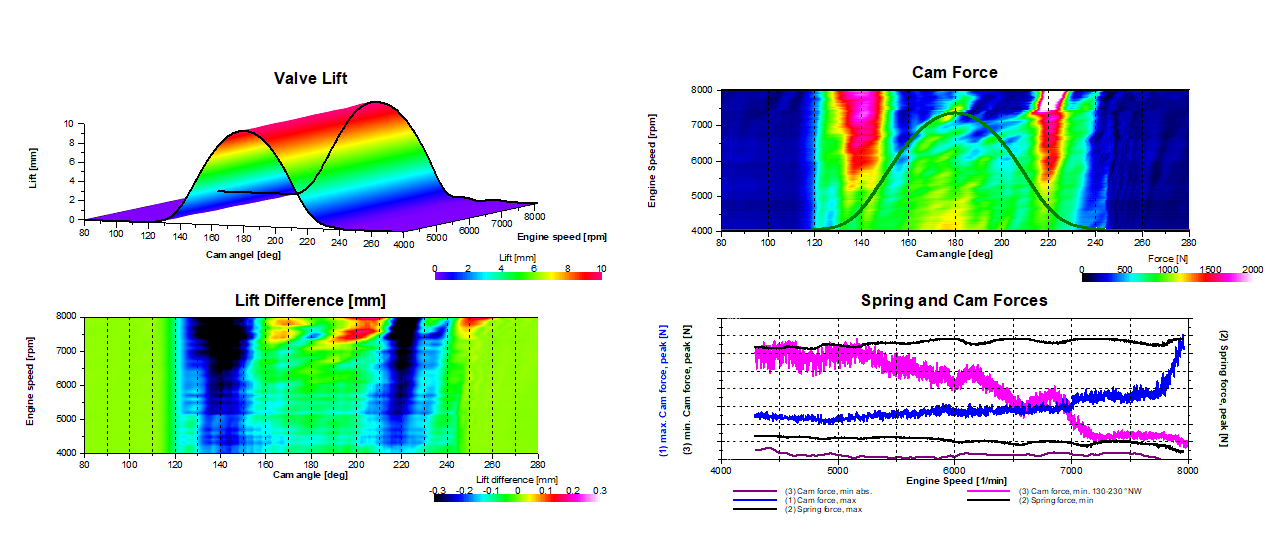
RAS Software supports measurement and application-specific analysis. Depending on the measurement chain, it can be used to investigate torsional vibration, torsional angle, transmission error, slip or valve dynamics.
ROTEC MEASUREMENT TECHNOLOGY
Laser sensors scan a black-and-white grating pattern on rotating components. The measurement chain links optical detection, TTL signal conditioning and angle-based analysis.
The laser sensors are used for optical measurement of the rotational frequency or speed of rotating machine parts. A line pattern is scanned using the reflection method. Reticle discs and strips are available in various dimensions.
The Laser Tachometer 3 (ElLas3) converts the signal from the ROTEC laser sensor into a pulse sequence with TTL level, which can then be processed by the RASdelta speed measurement card. The automatic teach-in function and coloured LEDs make operation easier.
The RASdelta speed card records digital pulses and stores timestamps for subsequent angle-based analysis in RAS Software.
RAS Software supports measurement and application-specific analysis. Depending on the measurement chain, it can be used to investigate torsional vibration, torsional angle, transmission error, slip or valve dynamics.
ROTEC MEASUREMENT TECHNOLOGY
Differential sensors detect ferromagnetic tooth structures. The measurement location determines the appropriate design and temperature variant.
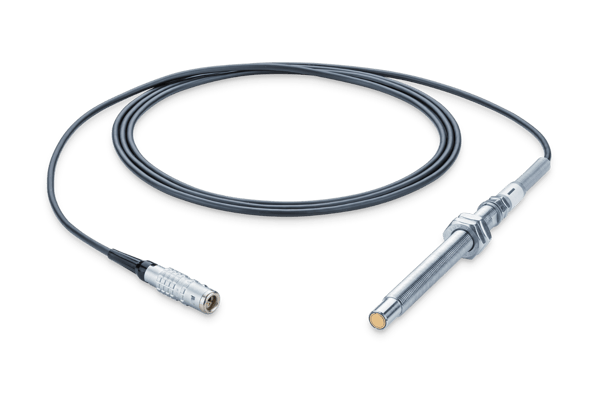
Differential sensors are used to measure the speed of ferromagnetic gears. Different designs and sensor lengths as well as high-temperature variants allow speed measurements to be realised efficiently.
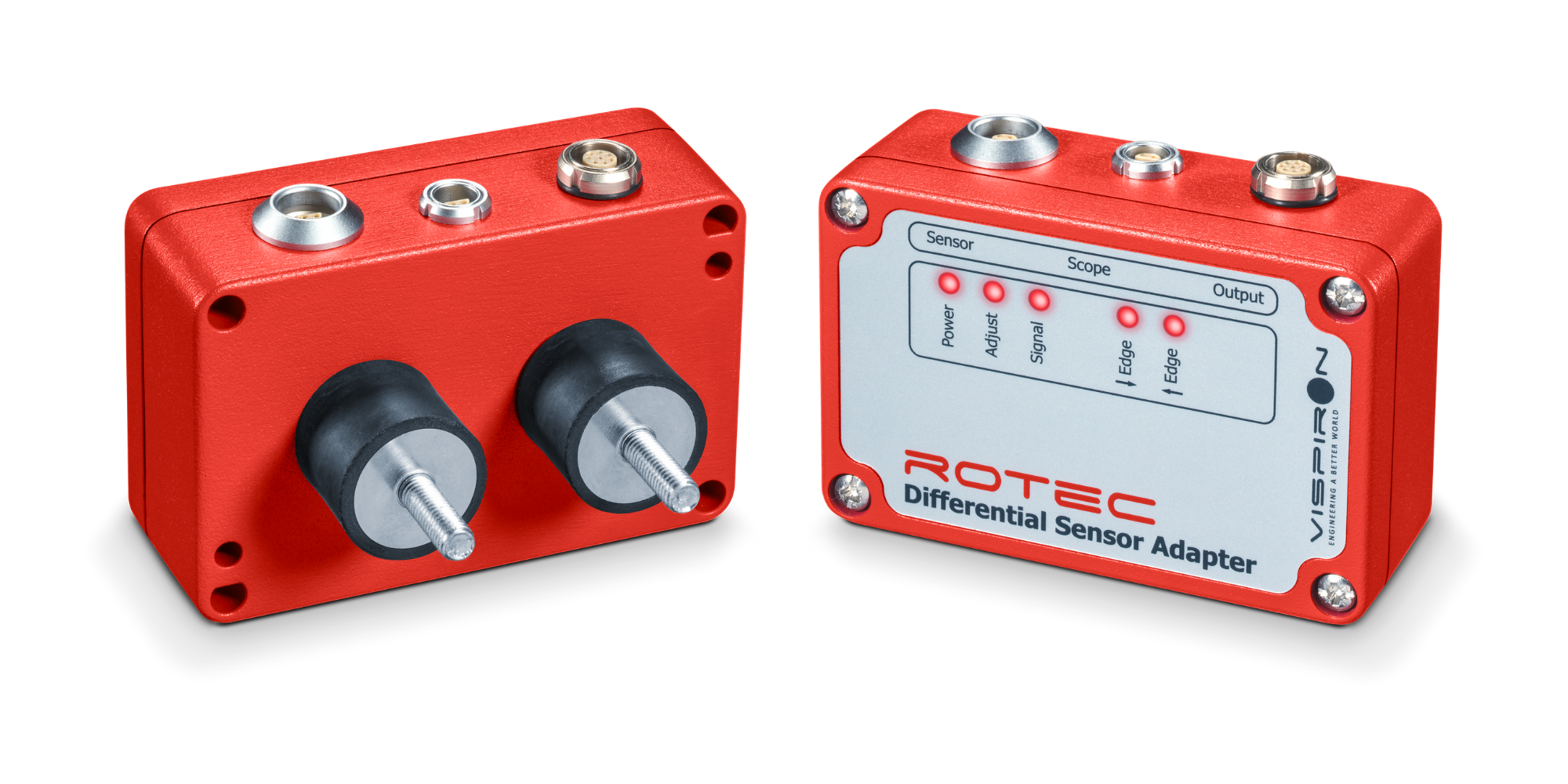
The Differential Sensor Adapter (DSA) converts the sinusoidal signal of the ROTEC magnetic sensor into a pulse sequence of needle pulses with TTL level, which is processed by the RASdelta speed measurement card.
The RASdelta speed card records digital pulses and stores timestamps for subsequent angle-based analysis in RAS Software.
RAS Software supports measurement and application-specific analysis. Depending on the measurement chain, it can be used to investigate torsional vibration, torsional angle, transmission error, slip or valve dynamics.
ROTEC MEASUREMENT TECHNOLOGY
Differential sensors detect ferromagnetic tooth structures. The measurement location determines the appropriate design and temperature variant.
Differential sensors are used to measure the speed of ferromagnetic gears. Different designs and sensor lengths as well as high-temperature variants allow speed measurements to be realised efficiently.
The Differential Sensor Adapter (DSA) converts the sinusoidal signal of the ROTEC magnetic sensor into a pulse sequence of needle pulses with TTL level, which is processed by the RASdelta speed measurement card.
The RASdelta speed card records digital pulses and stores timestamps for subsequent angle-based analysis in RAS Software.
RAS Software supports measurement and application-specific analysis. Depending on the measurement chain, it can be used to investigate torsional vibration, torsional angle, transmission error, slip or valve dynamics.
ROTEC MEASUREMENT TECHNOLOGY
GMR sensors and suitable signal conditioning provide the basis for investigating valve opening and closing behaviour.

The Sensitec GLM711 AVB sensor for valve lift measurement is designed for use on ferromagnetic tooth structures. The sensor supplies two 90 degree phase-shifted sinusoidal analogue signals.

The sine and cosine signals from the sensor are either converted online into a 0-10V stroke signal in the valve train measuring module (ELVTMM, formerly Sensitec SPP3001) or sent to the 3.2 MHz analogue inputs of the RASdelta as a SIN/COS track for further processing using the GMR sensor electronics.

The RASdelta analogue card records the SIN/COS signals from the valve lift sensor. The specification distinguishes a maximum of 3.2 MHz for single-channel use and 1.6 MHz per channel in dual-channel operation. The signals support analysis of valve seating velocity, bounce and other dynamic parameters.
RAS Software supports measurement and application-specific analysis. Depending on the measurement chain, it can be used to investigate torsional vibration, torsional angle, transmission error, slip or valve dynamics.
ROTEC MEASUREMENT TECHNOLOGY
GMR sensors and suitable signal conditioning provide the basis for investigating valve opening and closing behaviour.
The Sensitec GLM711 AVB sensor for valve lift measurement is designed for use on ferromagnetic tooth structures. The sensor supplies two 90 degree phase-shifted sinusoidal analogue signals.
The sine and cosine signals from the sensor are either converted online into a 0-10V stroke signal in the valve train measuring module (ELVTMM, formerly Sensitec SPP3001) or sent to the 3.2 MHz analogue inputs of the RASdelta as a SIN/COS track for further processing using the GMR sensor electronics.
The RASdelta analogue card records the SIN/COS signals from the valve lift sensor. The specification distinguishes a maximum of 3.2 MHz for single-channel use and 1.6 MHz per channel in dual-channel operation. The signals support analysis of valve seating velocity, bounce and other dynamic parameters.
RAS Software supports measurement and application-specific analysis. Depending on the measurement chain, it can be used to investigate torsional vibration, torsional angle, transmission error, slip or valve dynamics.
ROTEC measurement technology is used worldwide in development, on test benches and in operation – from automotive and motorsport to marine, energy and mechanical engineering.