

Rotec China Office nimmt offiziell den Betrieb auf
Click to view Rotec China Office nimmt offiziell den Betrieb auf
Rotec Munich setzt seinen internationalen Wachstumskurs konsequent fort: Das neue ROTEC China Office hat...

Every torsional vibration measurement starts with the sensor. Choosing the wrong one means either missing the vibration you're trying to detect or fighting reliability problems in the field. Here's a practical comparison of the sensor types used for torsional vibration measurement, and how to pick the right one for your application.
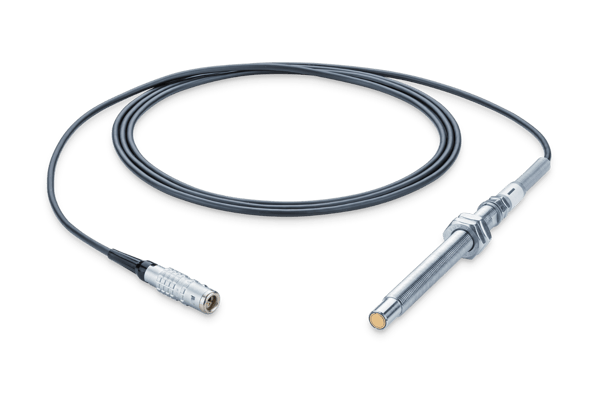
Magnetic pickups (pulse-per-revolution / PPR sensors) are the workhorse of torsional vibration sensing. They're robust, low-cost, and easy to install on an existing gear or toothed wheel. Fewer teeth mean fewer samples per revolution. This sampling density should be distinguished from the time resolution of the measurement system.
Best for: rugged environments, retrofitting onto existing gears, cost-sensitive applications.
Optical encoders use zebra tape or zebra discs read by a light barrier, delivering higher pulse rates and finer precision than magnetic pickups. The trade-off is sensitivity to dirt, dust, and oil — conditions common in engine bays and industrial gearboxes.
Best for: clean lab or test-bench environments where higher precision is needed and contamination can be controlled.
High-resolution incremental encoders deliver enough samples per revolution to resolve high-order effects, making them well suited to transmission error analysis and gear-meshing order identification.
Best for: applications requiring detailed high-order analysis, such as gearbox NVH and transmission diagnostics.
For applications that need to track fast linear or rotational motion at very fine geometric scale — such as valve lift or valve rotation in a fired engine — magneto-resistive (MR) sensors offer a different approach. A fine tooth structure (as small as 1 mm pitch) machined into the target modulates the magnetic field of a support magnet, and the sensor converts that modulation into a proportional electrical signal. Equipped with two Wheatstone bridges offset by a quarter pitch, an MR sensor outputs precise sine and cosine signals that can be processed into a displacement or angular curve — the same underlying principle used in high-precision torsional and valvetrain measurement.
| Requirement | Recommended Sensor |
|---|---|
| Rugged, low-cost, general-purpose | Magnetic pickup |
| High precision in a clean environment | Optical encoder |
| High-order / gear-mesh analysis | Incremental encoder |
| Fine-pitch displacement or rotation tracking | Magneto-resistive (MR) sensor |
A few practical considerations that matter as much as the raw specs:
Environment: Dust, oil, and vibration exposure can rule out optical solutions in favour of magnetic ones.
Target availability: Magnetic pickups need an existing or add-on gear/tone wheel; encoders may need a dedicated mounting point.
Required order range: Higher-order analysis (gear mesh, high-frequency harmonics) needs a sensor with enough pulses per revolution to avoid aliasing.
Signal conditioning: MR and encoder signals typically require dedicated conditioning hardware to deliver a clean, processable output.
It's a common misconception that a sensor's angular resolution is set by its number of teeth or lines. In practice, because the target wheel is rotating and modern measurement systems use high-resolution time counters (in the gigahertz range), the achievable angular resolution is typically far finer than the physical tooth pitch — depending on speed and time resolution. What really determines resolution is the counter's clock frequency, not the sensor's tooth count. More teeth or lines increase the sampling rate (how often you get a reading), not the fineness of each individual measurement.
ROTEC supplies complete, matched measurement chains — sensor, signal conditioning, and high-resolution measurement hardware with gigahertz-class speed input boards — so torsional vibration sensors deliver their full potential resolution in the field, not just on a datasheet.
Request a quote or product recommendation for your application, or read more about how these sensors feed into torsional vibration measurement and analysis.
Magnetic sensors can be suitable for harsh environments. Selection must consider temperature, sensor gap, target geometry, speed and required signal quality.
When optical access and a suitable target are available. Dirt, oil and dust must be considered when designing the setup.
It determines the samples per revolution and therefore the order range that can be captured. Measurement-system time resolution and target quality also influence the result.
Discuss your measurement task, operating conditions and suitable analysis with ROTEC.
Discuss your project →ROTEC KNOWLEDGE
Every torsional vibration measurement starts with the sensor. Choosing the wrong one means either missing the vibration you're trying to detect or fighting reliability problems in the field. Here's a practical comparison of the sensor types used for torsional vibration measurement, and how to pick the right one for your application.
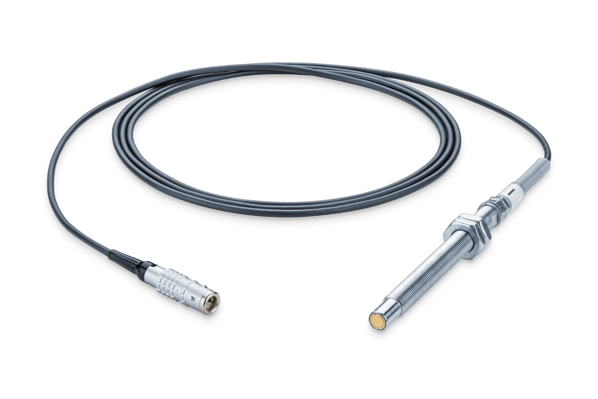
Magnetic pickups (pulse-per-revolution / PPR sensors) are the workhorse of torsional vibration sensing. They're robust, low-cost, and easy to install on an existing gear or toothed wheel. Fewer teeth mean fewer samples per revolution. This sampling density should be distinguished from the time resolution of the measurement system.
Best for: rugged environments, retrofitting onto existing gears, cost-sensitive applications.
Optical encoders use zebra tape or zebra discs read by a light barrier, delivering higher pulse rates and finer precision than magnetic pickups. The trade-off is sensitivity to dirt, dust, and oil — conditions common in engine bays and industrial gearboxes.
Best for: clean lab or test-bench environments where higher precision is needed and contamination can be controlled.
High-resolution incremental encoders deliver enough samples per revolution to resolve high-order effects, making them well suited to transmission error analysis and gear-meshing order identification.
Best for: applications requiring detailed high-order analysis, such as gearbox NVH and transmission diagnostics.
For applications that need to track fast linear or rotational motion at very fine geometric scale — such as valve lift or valve rotation in a fired engine — magneto-resistive (MR) sensors offer a different approach. A fine tooth structure (as small as 1 mm pitch) machined into the target modulates the magnetic field of a support magnet, and the sensor converts that modulation into a proportional electrical signal. Equipped with two Wheatstone bridges offset by a quarter pitch, an MR sensor outputs precise sine and cosine signals that can be processed into a displacement or angular curve — the same underlying principle used in high-precision torsional and valvetrain measurement.
| Requirement | Recommended Sensor |
|---|---|
| Rugged, low-cost, general-purpose | Magnetic pickup |
| High precision in a clean environment | Optical encoder |
| High-order / gear-mesh analysis | Incremental encoder |
| Fine-pitch displacement or rotation tracking | Magneto-resistive (MR) sensor |
A few practical considerations that matter as much as the raw specs:
Environment: Dust, oil, and vibration exposure can rule out optical solutions in favour of magnetic ones.
Target availability: Magnetic pickups need an existing or add-on gear/tone wheel; encoders may need a dedicated mounting point.
Required order range: Higher-order analysis (gear mesh, high-frequency harmonics) needs a sensor with enough pulses per revolution to avoid aliasing.
Signal conditioning: MR and encoder signals typically require dedicated conditioning hardware to deliver a clean, processable output.
It's a common misconception that a sensor's angular resolution is set by its number of teeth or lines. In practice, because the target wheel is rotating and modern measurement systems use high-resolution time counters (in the gigahertz range), the achievable angular resolution is typically far finer than the physical tooth pitch — depending on speed and time resolution. What really determines resolution is the counter's clock frequency, not the sensor's tooth count. More teeth or lines increase the sampling rate (how often you get a reading), not the fineness of each individual measurement.
ROTEC supplies complete, matched measurement chains — sensor, signal conditioning, and high-resolution measurement hardware with gigahertz-class speed input boards — so torsional vibration sensors deliver their full potential resolution in the field, not just on a datasheet.
Request a quote or product recommendation for your application, or read more about how these sensors feed into torsional vibration measurement and analysis.
Magnetic sensors can be suitable for harsh environments. Selection must consider temperature, sensor gap, target geometry, speed and required signal quality.
When optical access and a suitable target are available. Dirt, oil and dust must be considered when designing the setup.
It determines the samples per revolution and therefore the order range that can be captured. Measurement-system time resolution and target quality also influence the result.
Discuss your measurement task, operating conditions and suitable analysis with ROTEC.
Discuss your projectROTEC KNOWLEDGE
Every torsional vibration measurement starts with the sensor. Choosing the wrong one means either missing the vibration you're trying to detect or fighting reliability problems in the field. Here's a practical comparison of the sensor types used for torsional vibration measurement, and how to pick the right one for your application.
Magnetic pickups (pulse-per-revolution / PPR sensors) are the workhorse of torsional vibration sensing. They're robust, low-cost, and easy to install on an existing gear or toothed wheel. Fewer teeth mean fewer samples per revolution. This sampling density should be distinguished from the time resolution of the measurement system.
Best for: rugged environments, retrofitting onto existing gears, cost-sensitive applications.
Optical encoders use zebra tape or zebra discs read by a light barrier, delivering higher pulse rates and finer precision than magnetic pickups. The trade-off is sensitivity to dirt, dust, and oil — conditions common in engine bays and industrial gearboxes.
Best for: clean lab or test-bench environments where higher precision is needed and contamination can be controlled.
High-resolution incremental encoders deliver enough samples per revolution to resolve high-order effects, making them well suited to transmission error analysis and gear-meshing order identification.
Best for: applications requiring detailed high-order analysis, such as gearbox NVH and transmission diagnostics.
For applications that need to track fast linear or rotational motion at very fine geometric scale — such as valve lift or valve rotation in a fired engine — magneto-resistive (MR) sensors offer a different approach. A fine tooth structure (as small as 1 mm pitch) machined into the target modulates the magnetic field of a support magnet, and the sensor converts that modulation into a proportional electrical signal. Equipped with two Wheatstone bridges offset by a quarter pitch, an MR sensor outputs precise sine and cosine signals that can be processed into a displacement or angular curve — the same underlying principle used in high-precision torsional and valvetrain measurement.
| Requirement | Recommended Sensor |
|---|---|
| Rugged, low-cost, general-purpose | Magnetic pickup |
| High precision in a clean environment | Optical encoder |
| High-order / gear-mesh analysis | Incremental encoder |
| Fine-pitch displacement or rotation tracking | Magneto-resistive (MR) sensor |
A few practical considerations that matter as much as the raw specs:
Environment: Dust, oil, and vibration exposure can rule out optical solutions in favour of magnetic ones.
Target availability: Magnetic pickups need an existing or add-on gear/tone wheel; encoders may need a dedicated mounting point.
Required order range: Higher-order analysis (gear mesh, high-frequency harmonics) needs a sensor with enough pulses per revolution to avoid aliasing.
Signal conditioning: MR and encoder signals typically require dedicated conditioning hardware to deliver a clean, processable output.
It's a common misconception that a sensor's angular resolution is set by its number of teeth or lines. In practice, because the target wheel is rotating and modern measurement systems use high-resolution time counters (in the gigahertz range), the achievable angular resolution is typically far finer than the physical tooth pitch — depending on speed and time resolution. What really determines resolution is the counter's clock frequency, not the sensor's tooth count. More teeth or lines increase the sampling rate (how often you get a reading), not the fineness of each individual measurement.
ROTEC supplies complete, matched measurement chains — sensor, signal conditioning, and high-resolution measurement hardware with gigahertz-class speed input boards — so torsional vibration sensors deliver their full potential resolution in the field, not just on a datasheet.
Request a quote or product recommendation for your application, or read more about how these sensors feed into torsional vibration measurement and analysis.
Magnetic sensors can be suitable for harsh environments. Selection must consider temperature, sensor gap, target geometry, speed and required signal quality.
When optical access and a suitable target are available. Dirt, oil and dust must be considered when designing the setup.
It determines the samples per revolution and therefore the order range that can be captured. Measurement-system time resolution and target quality also influence the result.
Discuss your measurement task, operating conditions and suitable analysis with ROTEC.
Discuss your project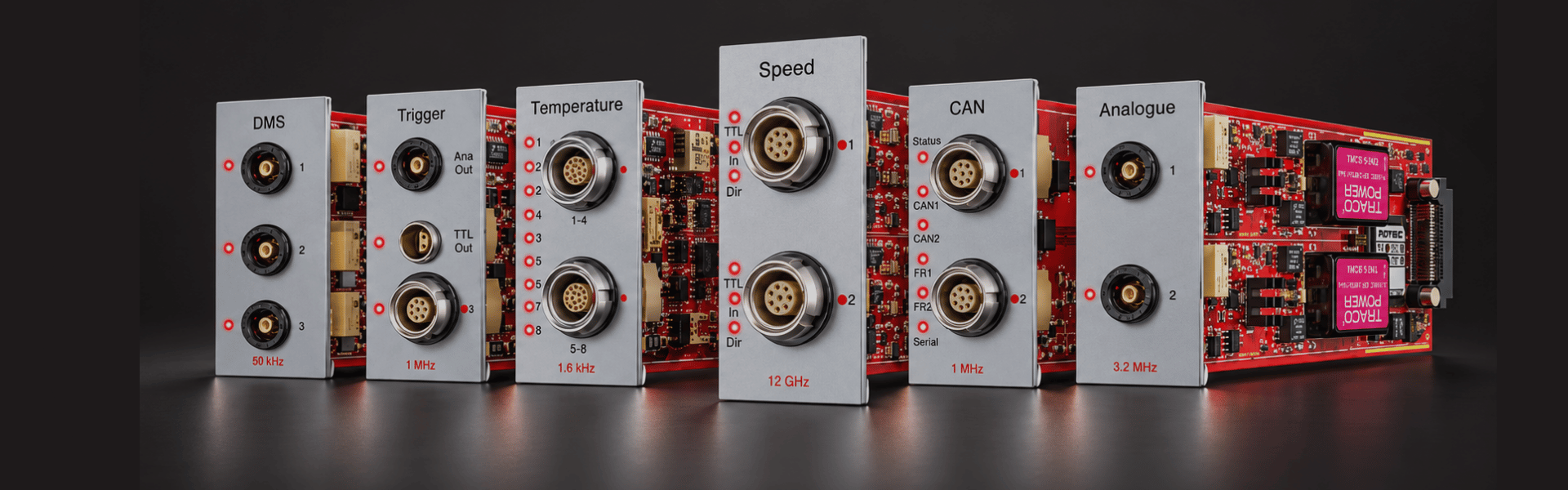






Präzise Ergebnisse entstehen durch das Zusammenspiel von Sensorik, Signalaufbereitung, Datenerfassung, Analyse und technischem Systemverständnis.
Steuertrieb, Nebenaggregate, Kupplung und Dämpfer, Getriebe sowie Ventildynamik werden gezielt analysiert, um das dynamische Verhalten des Verbrennungsmotors ganzheitlich zu verstehen.


Präzise Ergebnisse entstehen durch das Zusammenspiel von Sensorik, Signalaufbereitung, Datenerfassung, Analyse und technischem Systemverständnis.