

ROTEC · Measurement applications
Ancillary drives: FEAD and BAS analysis
Investigate slip, belt forces and dynamic behaviour in front-end accessory drives and belt starter-generator systems.
Measurement task and objective
Investigate slip, belt vibration and loading in ancillary-unit drives. Measurement results support the assessment and design of FEAD and belt starter-generator systems.

Time-domain analysis
- Belt loads.
- Bearing forces.
- Slip throughout the drive.
- Starting and stopping behaviour.

Spectral analysis
- Tensioner resonances.
- Resonances of the complete drive.
- Automatic generation of result tables.
- Decoupling behaviour.
Functional testing of FEAD and BAS drives
Testing front-end accessory drives (FEAD) and belt starter-generator drives (BAS) includes evaluating slip and the dynamic behaviour of the complete belt-drive system.
The measurement arrangement records the angular positions of the crankshaft and other pulleys, alongside belt forces, tensioner movement and belt vibration. Engine operating state, ancillary-unit loads and starter-generator torque also influence the response.
Data are evaluated in the time and spectral domains.
Investigating ancillary drives
Ancillary units such as a power-steering pump or air-conditioning compressor contribute to vehicle comfort. Belt tension is an important influence on the drive.
Insufficient tension can contribute to slip, belt vibration and premature wear. Measurements help assess these effects under the operating conditions of the application.
Hybrid drives and CAN-bus integration
Battery state of charge is relevant in hybrid systems. Where the necessary signals and resolution are available on the CAN bus, a ROTEC CAN-bus card can record them alongside other measurements.
Engine starting and stopping, and switching the starter-generator between motoring and generating operation, place particular demands on the measurement.
Direction-sensitive sensing supports correct interpretation of speed and rotation direction during these transitions. The UK source identifies encoder adaptation modules and quadrature encoders as suitable options; the exact sensor configuration should be confirmed for the application.
Questions and answers
What is RAS, and what does the ROTEC rotational analysis solution include?
The ROTEC Rotational Analysis System (RAS) is used to analyse rotating components in mechanical engineering, automotive development, power generation and motorsport. It combines high-resolution counter-based acquisition with an angle-based approach to rotational speed measurement and analysis.
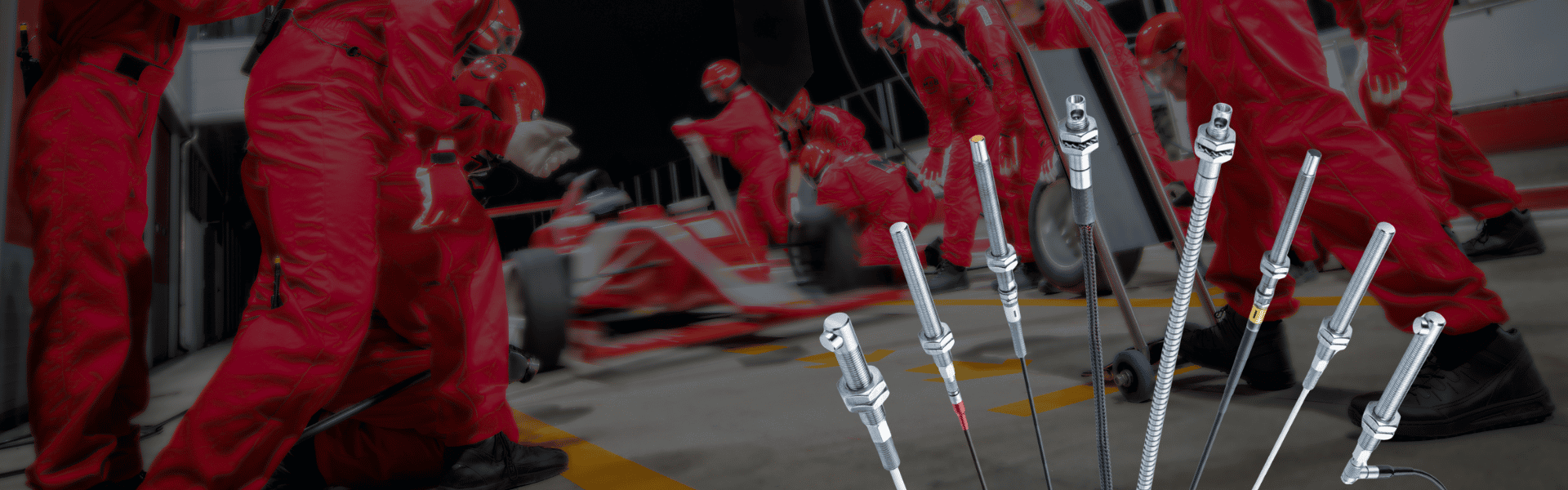
The measurement chain includes optical and magnetic speed sensors, signal-conditioning adapters, the modular RASdelta measurement system and specialised measurement and analysis software. The angle-based approach can help identify sensor vibration and other measurement influences during evaluation. ROTEC ENGINEERING supports demanding measurement tasks.
Can the measurement system and software be configured for a specific application?
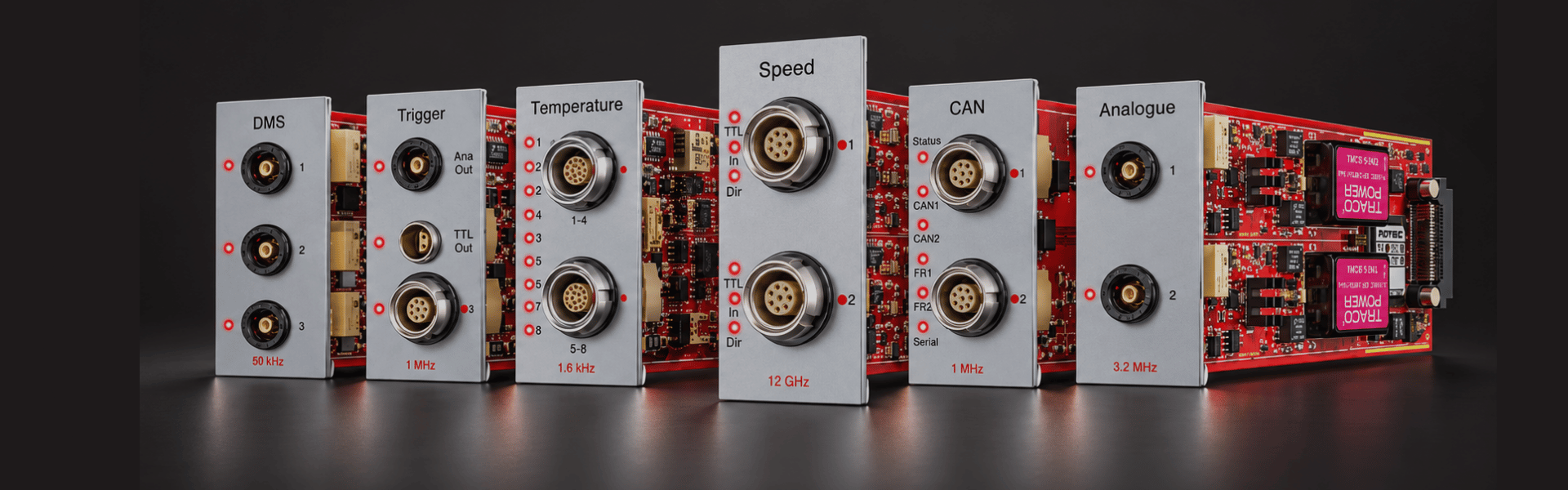
RASdelta is a modular measurement front end. The source describes configurations with 8 or 16 measurement cards, selected to suit the measurement task. RAS software provides tools for analysing rotating components and complex systems without requiring users to write their own measurement or analysis programs.
ROTEC ENGINEERING can advise on application-specific measurement questions and the selection of a suitable configuration.
Does ROTEC also provide engineering and project support?
Alongside sensors, signal conditioning, data acquisition and analysis software, ROTEC provides engineering and consulting services. These include measurement-point design in CAD, component machining, sensor installation and calibration, measurement execution, data evaluation and presentation of results.
Project support can cover individual work packages as well as a wider measurement project, according to the agreed scope.
Is training available for commissioning and using a measurement system?
ROTEC offers its Training Week in German and English as well as application-specific user training. Training can combine measurement principles, a detailed introduction to the software and practical demonstration measurements in the user’s environment.
Support is also available when commissioning a new system and becoming familiar with the settings and functions of RAS software.
How can users access support and self-help information?
The Munich sales and support team serves Central Europe, supported by local partners in other markets. Partners assist with measurement technology, first-level support and sales enquiries.
ROTEC also provides a knowledge base with registration-based access to information on topics including torsional vibration, transmission error and valve train analysis. Contact the team to discuss the appropriate support route for your application.
Discuss your measurement task with ROTEC
ROTEC ENGINEERING supports measurement-system selection, installation, testing and evaluation to suit your application.