Change language
Change language

ROTEC MEASUREMENT TECHNOLOGY

RASdelta measurement system

Modular data acquisition for torsional vibration, valve dynamics and transmission error.

ROTEC RASdelta measurement systems

ROTEC MEASUREMENT TECHNOLOGY

Configured around your measurement task

RASdelta is available with 8 or 16 measurement slots. Users can configure and replace measurement cards. An integrated touch panel supports operation, while the data logger option enables acquisition without a connected PC. Up to six RASdelta front ends can be cascaded through the second Ethernet interface.

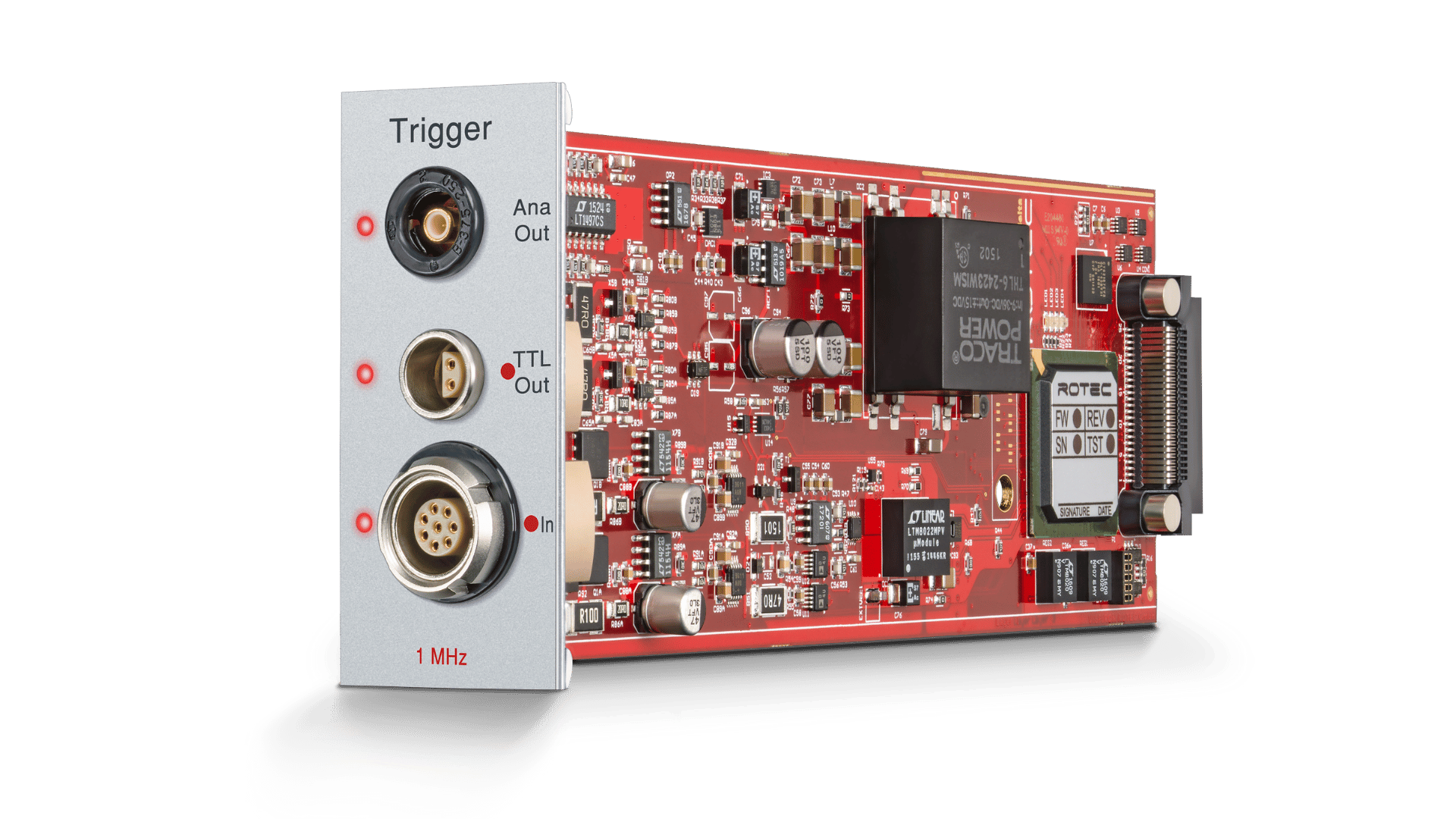
Trigger card

Trigger card

Synchronises all measuring cards, channels and cascaded systems

1x TTL trigger input with adjustable threshold values

2x TTL output for online monitoring

Power supply for electronic units (DC 5 V and 12 V; 5 W)

The RASdelta trigger card synchronises all measurement data between the channels, acquisition modules and connected front ends. As a master card, it is an integral part of the RASdelta.

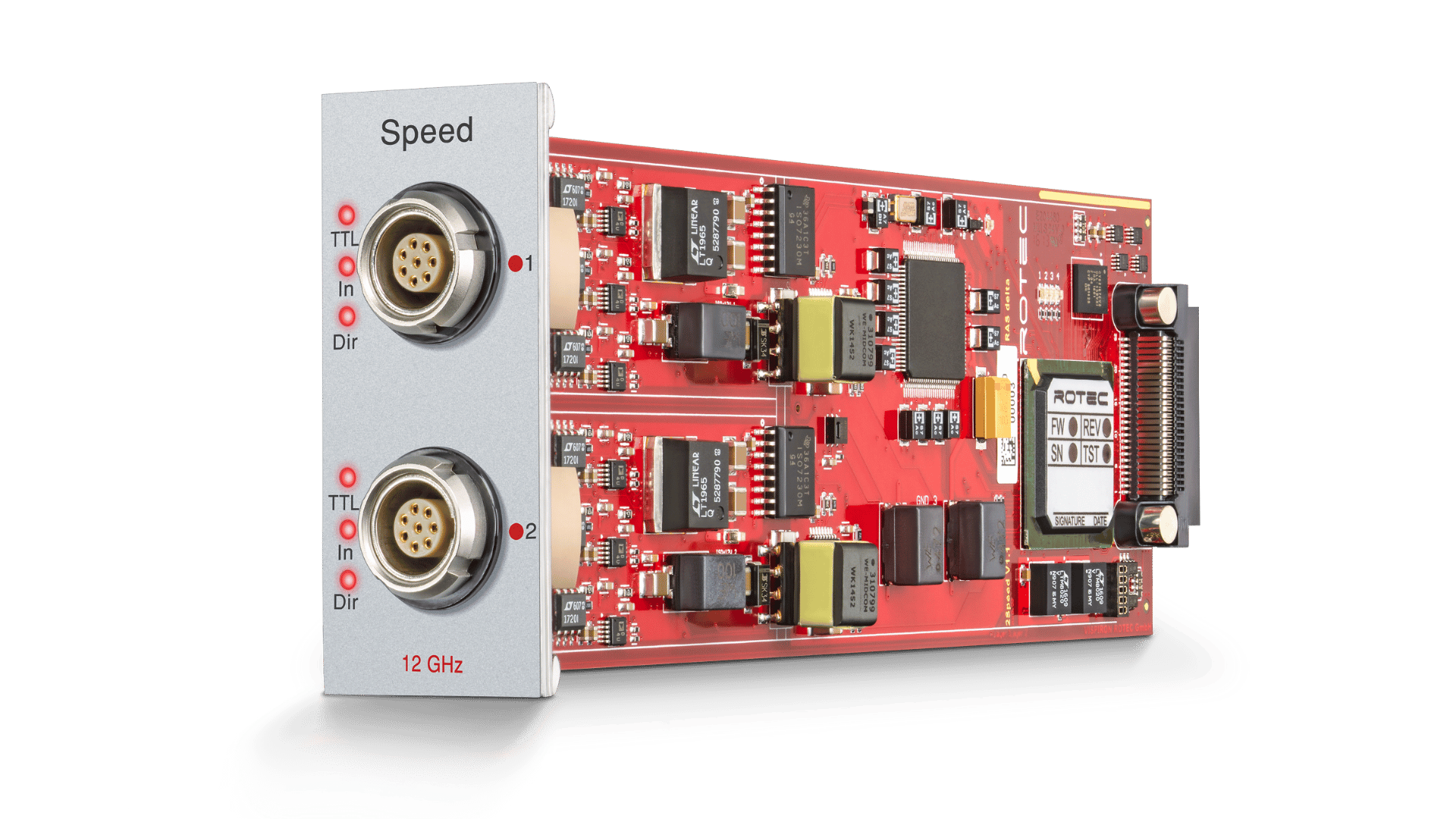
Speed card

Speed card

Two-channel card for digital rotational speed measurement.

Signal inputs for direction and reference pulse detection
Adjustable values for trigger threshold and edge
Operating modes: speed, frequency, duty cycle, on/off ratio

The RASdelta Speed Board records precise multi-channel and digital speed measurement data for all transmission, control and auxiliary drive tests. It is therefore the basis for torsional vibration analysis. The data is recorded via magnetic, angle-equidistant scanning, an incremental encoder or a laser.

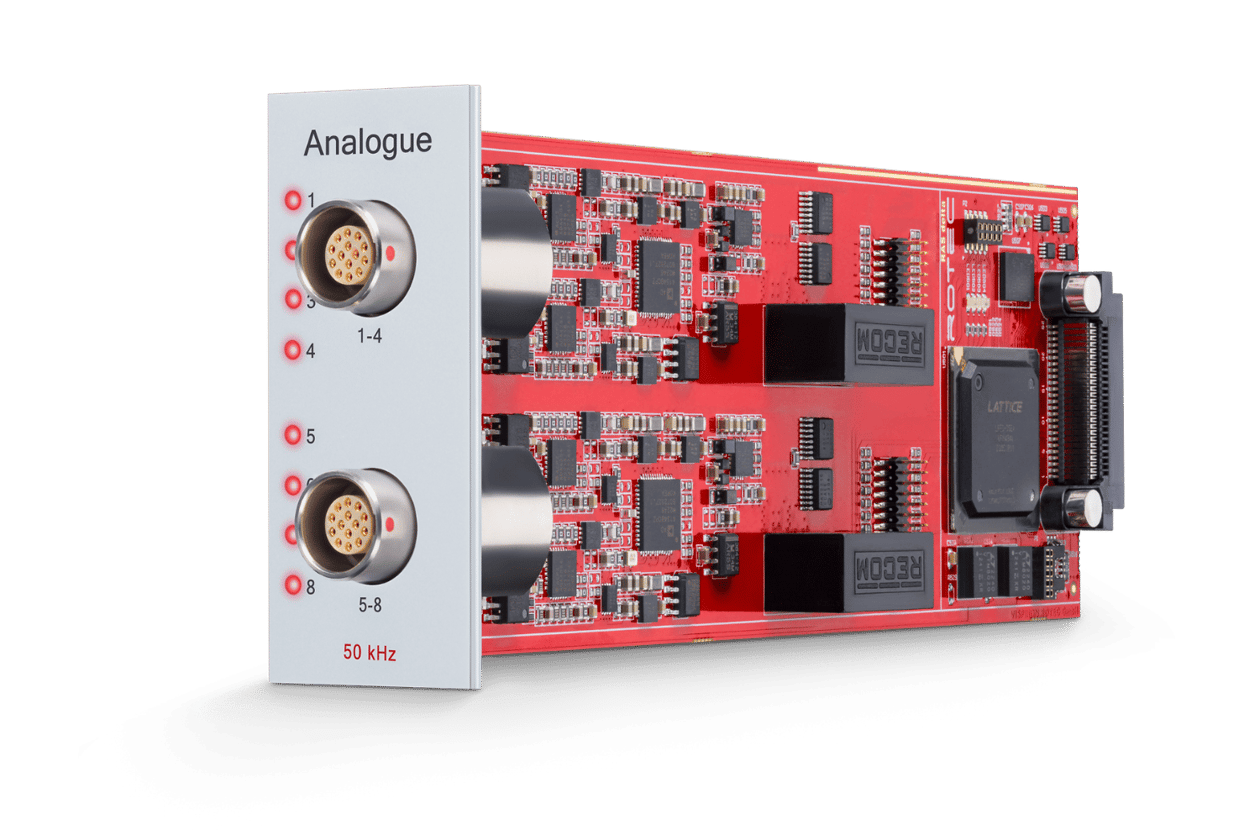
RASdeltaANA8

RASdeltaANA8

8-channel measurement board

2x 4 channels galvanically isolated

AC- and DC- coupling, power supply for IEPE (ICP) sensors

Adjustable voltage ranges for input signals

24 bit SigmaDelta ADC

50 kHz max. sampling rate per channel

24 kHz analogue bandwidth

The RASdelta analogue board (8-channel) measures analogue variables such as airborne and structure-borne sound, acceleration, temperature, displacement or pressure. These variables can be used to determine the position of a sound source or to analyse the valve train or cylinder pressure. The analogue measurement data is recorded by time-equidistant sampling.

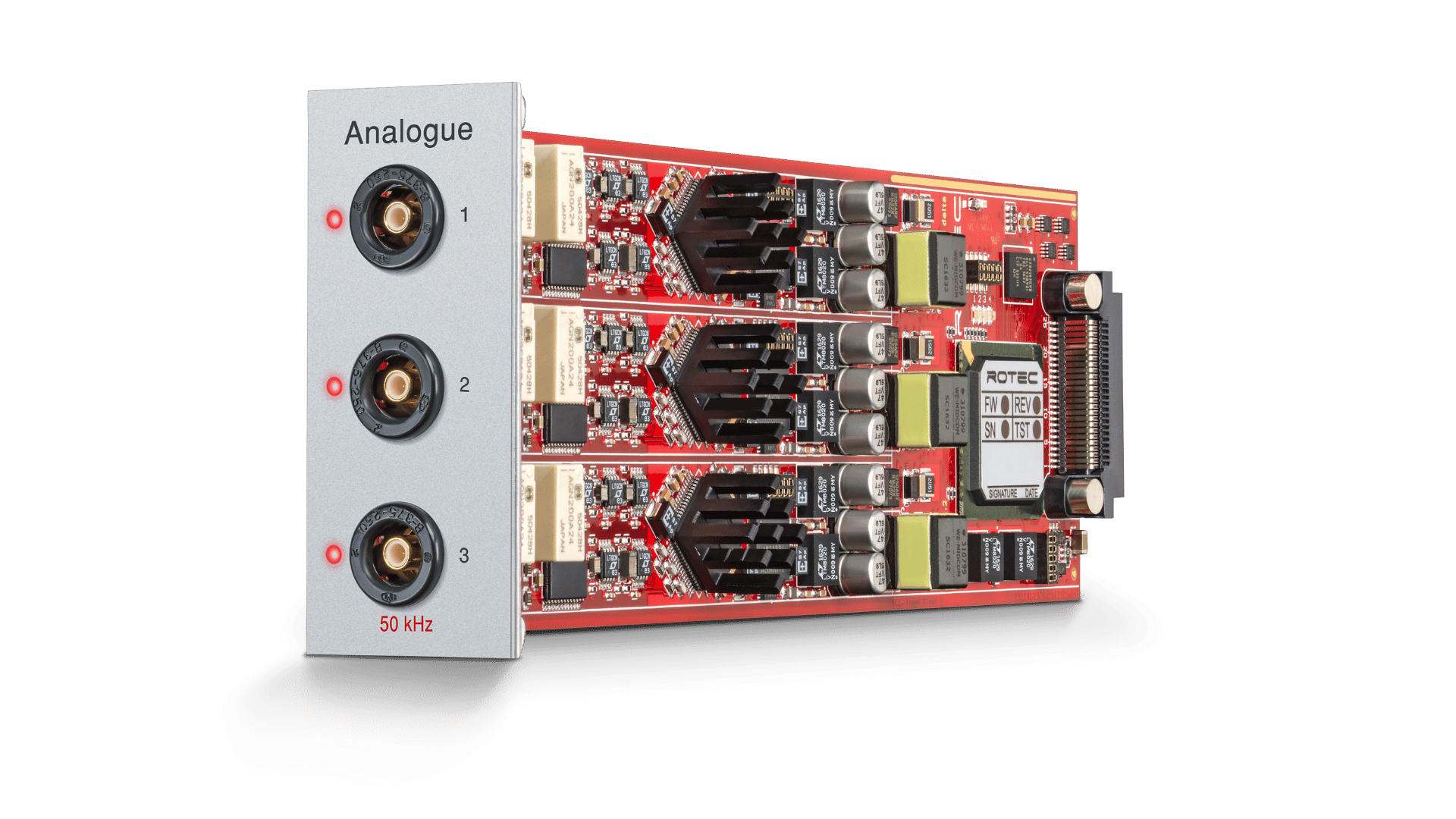
Analogue card

Analogue card

3 analogue voltage inputs, galvanically isolated
AC and DC coupling, power supply for IEPE (ICP) sensors
Adjustable voltage ranges for input signals
24 bit SigmaDelta ADC
50 kHz max. sampling rate per channel
24 kHz analogue bandwidth
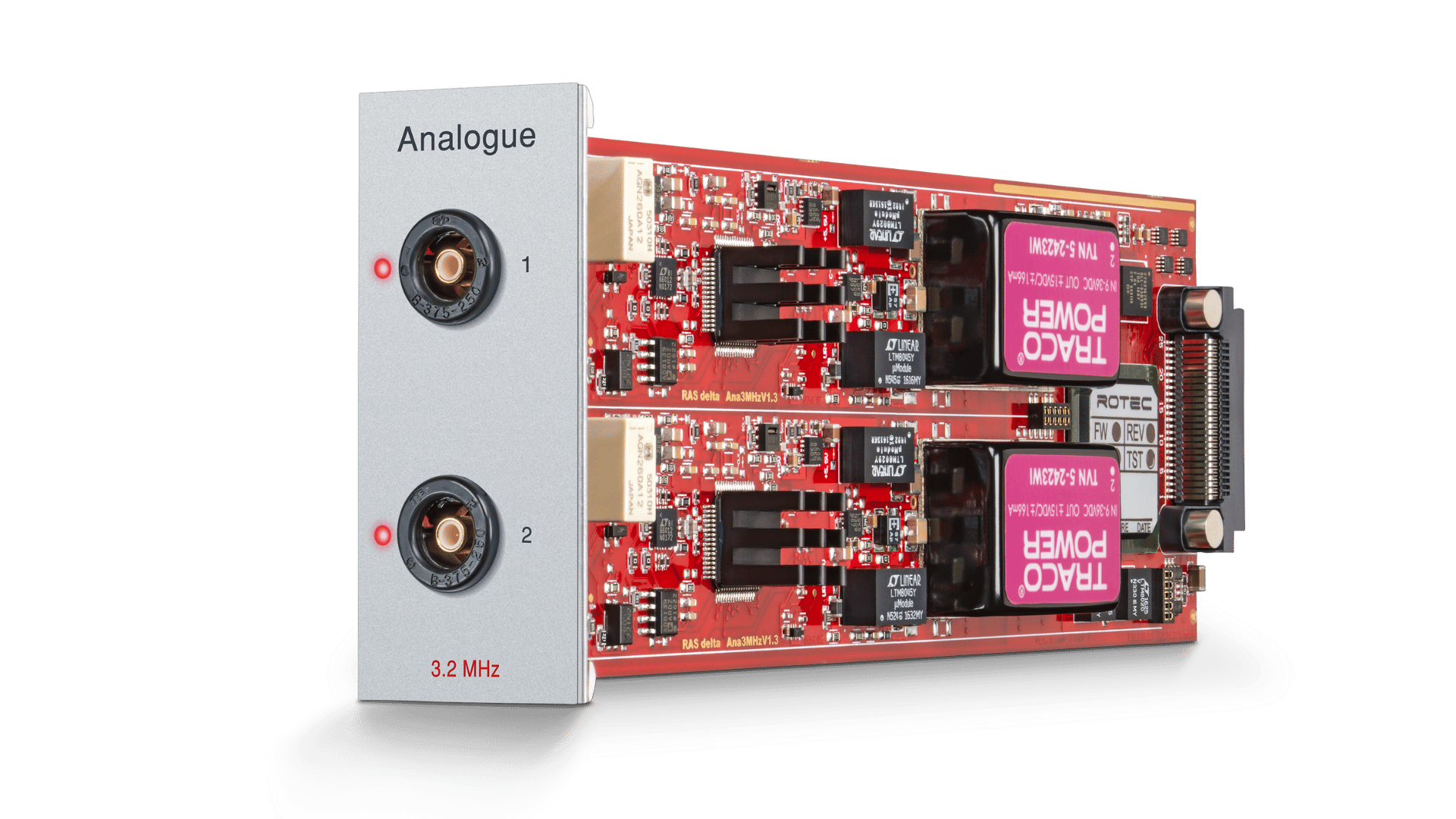
3.2 MHz analogue card

3.2 MHz analogue card

Analogue card 3.2 MHz

2 analogue voltage inputs, galvanically isolated
AC and DC coupling, power supply for IEPE (ICP) sensors
Adjustable voltage ranges for input signals
16 bit SigmaDelta ADC
3.2 MHz max. sampling rate for single-channel use
1.6 MHz max. sampling rate per channel for dual-channel operation
1.2 MHz analogue bandwidth
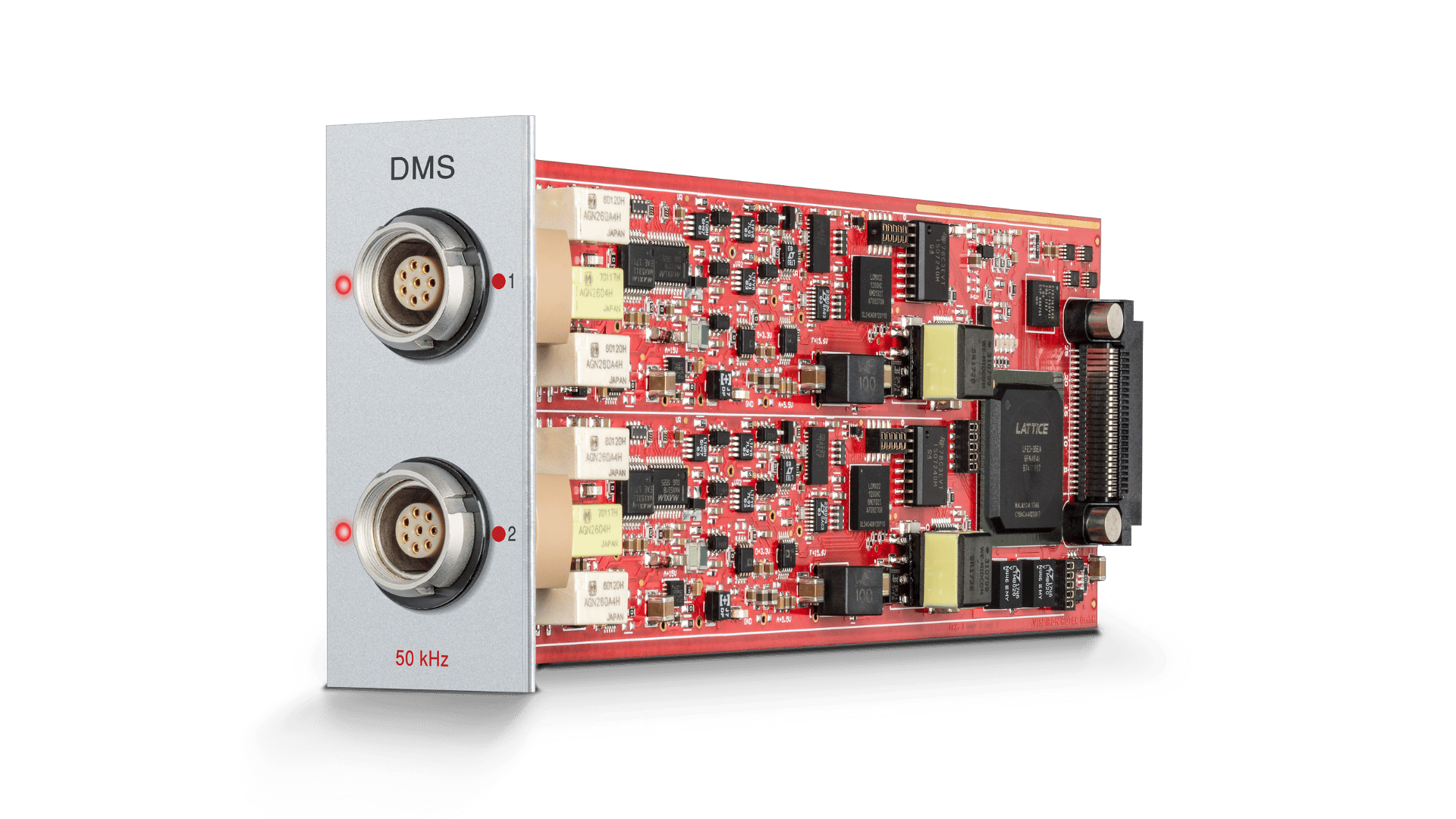
Strain gauge card

Strain gauge card

2-channel measuring card
Max. Sampling rate: 50 kHz per channel
Supports full bridge and half bridge applications
Adjustable bridge supply voltage: 1 V, 2.5 V, 5 V, 10 V
Supports four-wire and six-wire configuration
Automatic zero balancing
Detection of line interruptions/burn-out

The RASdelta strain gauge card is an integrated two-channel DC voltage amplifier for signal acquisition from strain gauge-based, piezoresistive, magnetoresistive or potentiometric transducers. These include force, torque, pressure, displacement and angle sensors or scales. The card does not require any additional measuring amplifiers.

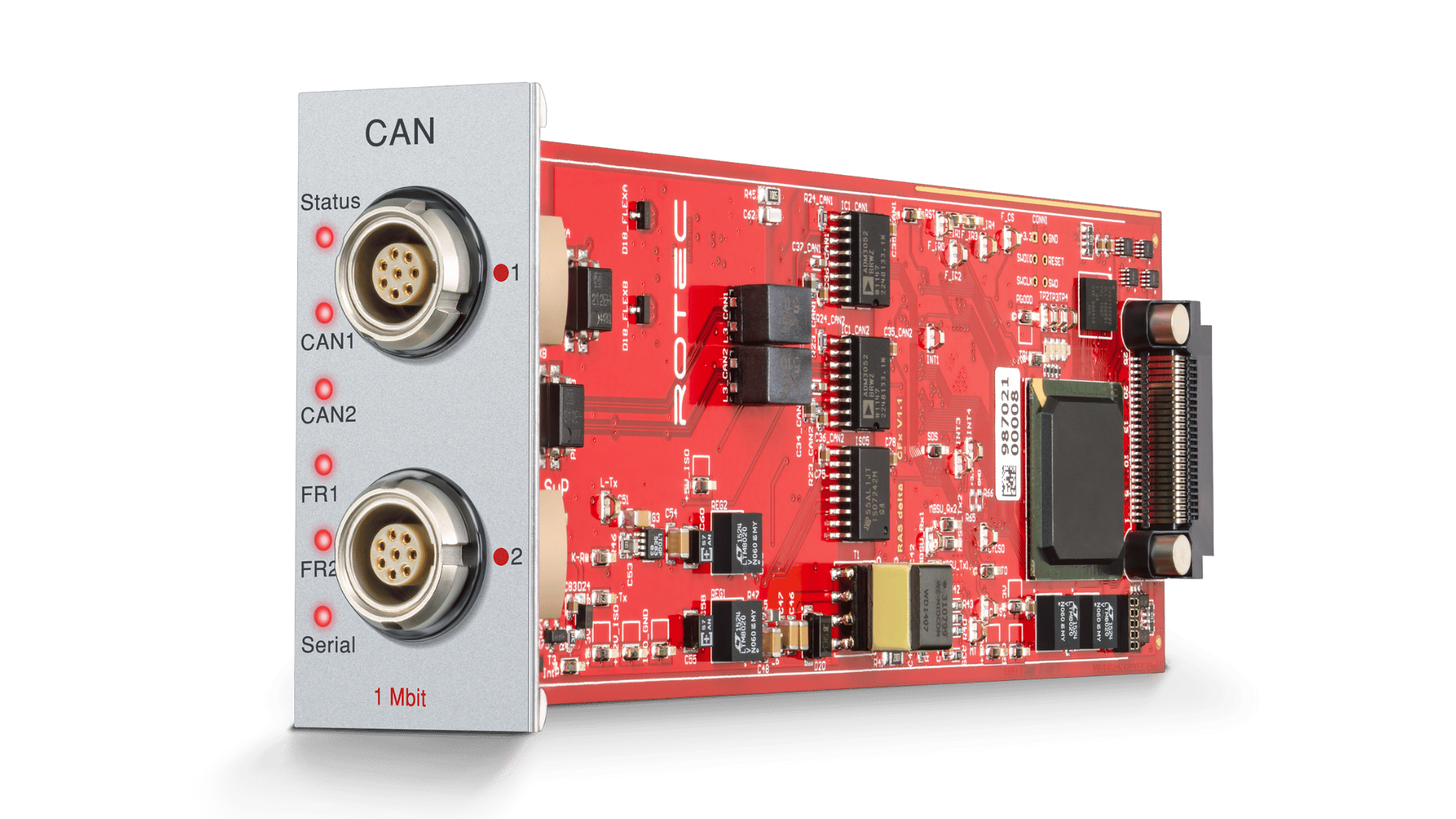
CAN-BUS card

CAN-BUS card

2-channel measuring card
Max. Baud rate: 1 Mbit/s per channel
Adjustable post-sampling rate
CAN standard 2.0 A (11-bit identifier) and 2.0 B (29-bit identifier); OBDII; J1939; (CAN-FD via PC USB connection)
Modes: active/passive listener
Adjustable BUS termination (120 Ohm)

The CAN-BUS card records CAN and OBD-II variables and analyses them in relation to the torsional vibration analysis. This means that existing variables can be included in the measurement without the need for additional sensor applications. In addition to OBD II, Raw CAN and SAE J1939 protocol, it is possible to record FD CAN data directly via the measurement PC and separate third-party hardware.

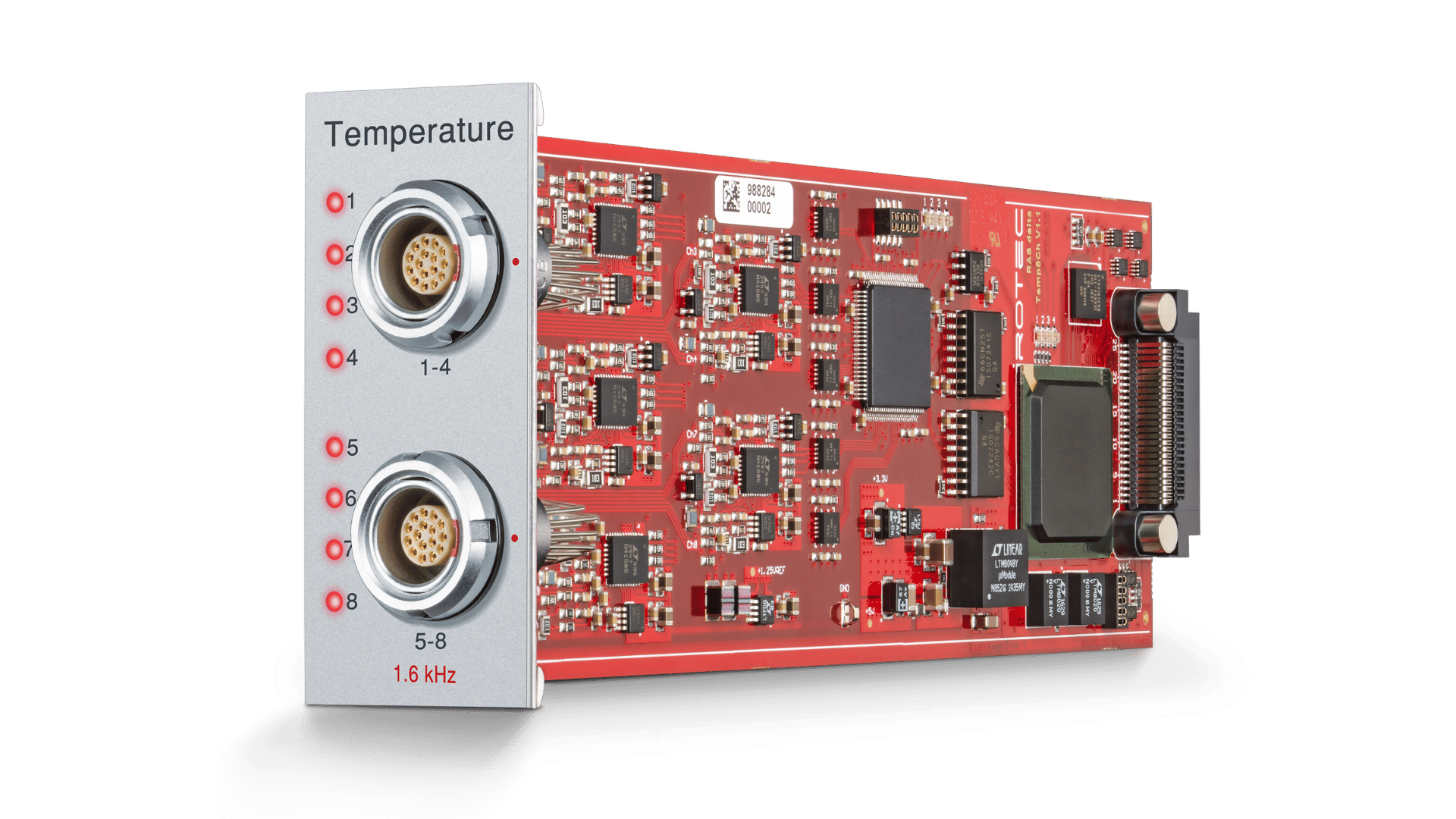
Temperature card

Temperature card

8-channel measuring card
Maximum sampling rate: 1.6 kHz per channel (when using 4 channels)
Temperature measuring range: -200°C - 850°C

Supported sensors:

- Pt100/1000
- Type J thermocouple (Fe/CuNi)
- Type K thermocouple (NiCr/Ni)
- Type T thermocouple (Cu/CuNi)

With the RASdelta temperature measurement card, you can record measurement data from resistance thermometers and thermocouples.
Measuring the oil temperature in vehicles is essential, especially when analysing transmissions.

Discuss your measurement task

ROTEC MEASUREMENT TECHNOLOGY

Configured around your measurement task

RASdelta is available with 8 or 16 measurement slots. Users can configure and replace measurement cards. An integrated touch panel supports operation, while the data logger option enables acquisition without a connected PC. Up to six RASdelta front ends can be cascaded through the second Ethernet interface.

Trigger card

Trigger card

Synchronises all measuring cards, channels and cascaded systems

1x TTL trigger input with adjustable threshold values

2x TTL output for online monitoring

Power supply for electronic units (DC 5 V and 12 V; 5 W)

The RASdelta trigger card synchronises all measurement data between the channels, acquisition modules and connected front ends. As a master card, it is an integral part of the RASdelta.

Speed card

Speed card

Two-channel card for digital rotational speed measurement.

Signal inputs for direction and reference pulse detection
Adjustable values for trigger threshold and edge
Operating modes: speed, frequency, duty cycle, on/off ratio

The RASdelta Speed Board records precise multi-channel and digital speed measurement data for all transmission, control and auxiliary drive tests. It is therefore the basis for torsional vibration analysis. The data is recorded via magnetic, angle-equidistant scanning, an incremental encoder or a laser.

RASdeltaANA8

RASdeltaANA8

8-channel measurement board

2x 4 channels galvanically isolated

AC- and DC- coupling, power supply for IEPE (ICP) sensors

Adjustable voltage ranges for input signals

24 bit SigmaDelta ADC

50 kHz max. sampling rate per channel

24 kHz analogue bandwidth

The RASdelta analogue board (8-channel) measures analogue variables such as airborne and structure-borne sound, acceleration, temperature, displacement or pressure. These variables can be used to determine the position of a sound source or to analyse the valve train or cylinder pressure. The analogue measurement data is recorded by time-equidistant sampling.

Analogue card

Analogue card
3 analogue voltage inputs, galvanically isolated
AC and DC coupling, power supply for IEPE (ICP) sensors
Adjustable voltage ranges for input signals
24 bit SigmaDelta ADC
50 kHz max. sampling rate per channel
24 kHz analogue bandwidth

3.2 MHz analogue card

3.2 MHz analogue card

Analogue card 3.2 MHz

2 analogue voltage inputs, galvanically isolated
AC and DC coupling, power supply for IEPE (ICP) sensors
Adjustable voltage ranges for input signals
16 bit SigmaDelta ADC
3.2 MHz max. sampling rate for single-channel use
1.6 MHz max. sampling rate per channel for dual-channel operation
1.2 MHz analogue bandwidth

Strain gauge card

Strain gauge card

2-channel measuring card
Max. Sampling rate: 50 kHz per channel
Supports full bridge and half bridge applications
Adjustable bridge supply voltage: 1 V, 2.5 V, 5 V, 10 V
Supports four-wire and six-wire configuration
Automatic zero balancing
Detection of line interruptions/burn-out

The RASdelta strain gauge card is an integrated two-channel DC voltage amplifier for signal acquisition from strain gauge-based, piezoresistive, magnetoresistive or potentiometric transducers. These include force, torque, pressure, displacement and angle sensors or scales. The card does not require any additional measuring amplifiers.

CAN-BUS card

CAN-BUS card

2-channel measuring card
Max. Baud rate: 1 Mbit/s per channel
Adjustable post-sampling rate
CAN standard 2.0 A (11-bit identifier) and 2.0 B (29-bit identifier); OBDII; J1939; (CAN-FD via PC USB connection)
Modes: active/passive listener
Adjustable BUS termination (120 Ohm)

The CAN-BUS card records CAN and OBD-II variables and analyses them in relation to the torsional vibration analysis. This means that existing variables can be included in the measurement without the need for additional sensor applications. In addition to OBD II, Raw CAN and SAE J1939 protocol, it is possible to record FD CAN data directly via the measurement PC and separate third-party hardware.

Temperature card

Temperature card

8-channel measuring card
Maximum sampling rate: 1.6 kHz per channel (when using 4 channels)
Temperature measuring range: -200°C - 850°C

Supported sensors:

- Pt100/1000
- Type J thermocouple (Fe/CuNi)
- Type K thermocouple (NiCr/Ni)
- Type T thermocouple (Cu/CuNi)

With the RASdelta temperature measurement card, you can record measurement data from resistance thermometers and thermocouples.
Measuring the oil temperature in vehicles is essential, especially when analysing transmissions.

ROTEC MEASUREMENT TECHNOLOGY

Configured around your measurement task

RASdelta is available with 8 or 16 measurement slots. Users can configure and replace measurement cards. An integrated touch panel supports operation, while the data logger option enables acquisition without a connected PC. Up to six RASdelta front ends can be cascaded through the second Ethernet interface.

Trigger card

Trigger card

Synchronises all measuring cards, channels and cascaded systems

1x TTL trigger input with adjustable threshold values

2x TTL output for online monitoring

Power supply for electronic units (DC 5 V and 12 V; 5 W)

The RASdelta trigger card synchronises all measurement data between the channels, acquisition modules and connected front ends. As a master card, it is an integral part of the RASdelta.

Speed card

Speed card

Two-channel card for digital rotational speed measurement.

Signal inputs for direction and reference pulse detection
Adjustable values for trigger threshold and edge
Operating modes: speed, frequency, duty cycle, on/off ratio

The RASdelta Speed Board records precise multi-channel and digital speed measurement data for all transmission, control and auxiliary drive tests. It is therefore the basis for torsional vibration analysis. The data is recorded via magnetic, angle-equidistant scanning, an incremental encoder or a laser.

RASdeltaANA8

RASdeltaANA8

8-channel measurement board

2x 4 channels galvanically isolated

AC- and DC- coupling, power supply for IEPE (ICP) sensors

Adjustable voltage ranges for input signals

24 bit SigmaDelta ADC

50 kHz max. sampling rate per channel

24 kHz analogue bandwidth

The RASdelta analogue board (8-channel) measures analogue variables such as airborne and structure-borne sound, acceleration, temperature, displacement or pressure. These variables can be used to determine the position of a sound source or to analyse the valve train or cylinder pressure. The analogue measurement data is recorded by time-equidistant sampling.

Analogue card

Analogue card

3 analogue voltage inputs, galvanically isolated
AC and DC coupling, power supply for IEPE (ICP) sensors
Adjustable voltage ranges for input signals
24 bit SigmaDelta ADC
50 kHz max. sampling rate per channel
24 kHz analogue bandwidth
3.2 MHz analogue card

3.2 MHz analogue card

Analogue card 3.2 MHz

2 analogue voltage inputs, galvanically isolated
AC and DC coupling, power supply for IEPE (ICP) sensors
Adjustable voltage ranges for input signals
16 bit SigmaDelta ADC
3.2 MHz max. sampling rate for single-channel use
1.6 MHz max. sampling rate per channel for dual-channel operation
1.2 MHz analogue bandwidth
Strain gauge card

Strain gauge card

2-channel measuring card
Max. Sampling rate: 50 kHz per channel
Supports full bridge and half bridge applications
Adjustable bridge supply voltage: 1 V, 2.5 V, 5 V, 10 V
Supports four-wire and six-wire configuration
Automatic zero balancing
Detection of line interruptions/burn-out

The RASdelta strain gauge card is an integrated two-channel DC voltage amplifier for signal acquisition from strain gauge-based, piezoresistive, magnetoresistive or potentiometric transducers. These include force, torque, pressure, displacement and angle sensors or scales. The card does not require any additional measuring amplifiers.

CAN-BUS card

CAN-BUS card

2-channel measuring card
Max. Baud rate: 1 Mbit/s per channel
Adjustable post-sampling rate
CAN standard 2.0 A (11-bit identifier) and 2.0 B (29-bit identifier); OBDII; J1939; (CAN-FD via PC USB connection)
Modes: active/passive listener
Adjustable BUS termination (120 Ohm)

The CAN-BUS card records CAN and OBD-II variables and analyses them in relation to the torsional vibration analysis. This means that existing variables can be included in the measurement without the need for additional sensor applications. In addition to OBD II, Raw CAN and SAE J1939 protocol, it is possible to record FD CAN data directly via the measurement PC and separate third-party hardware.

Temperature card

Temperature card

8-channel measuring card
Maximum sampling rate: 1.6 kHz per channel (when using 4 channels)
Temperature measuring range: -200°C - 850°C

Supported sensors:

- Pt100/1000
- Type J thermocouple (Fe/CuNi)
- Type K thermocouple (NiCr/Ni)
- Type T thermocouple (Cu/CuNi)

With the RASdelta temperature measurement card, you can record measurement data from resistance thermometers and thermocouples.
Measuring the oil temperature in vehicles is essential, especially when analysing transmissions.

Discuss your measurement task

ROTEC MEASUREMENT TECHNOLOGY

Configured around your measurement task

RASdelta is available with 8 or 16 measurement slots. Users can configure and replace measurement cards. An integrated touch panel supports operation, while the data logger option enables acquisition without a connected PC. Up to six RASdelta front ends can be cascaded through the second Ethernet interface.

Trigger card

Trigger card

Synchronises all measuring cards, channels and cascaded systems

1x TTL trigger input with adjustable threshold values

2x TTL output for online monitoring

Power supply for electronic units (DC 5 V and 12 V; 5 W)

The RASdelta trigger card synchronises all measurement data between the channels, acquisition modules and connected front ends. As a master card, it is an integral part of the RASdelta.

Speed card

Speed card

Two-channel card for digital rotational speed measurement.

Signal inputs for direction and reference pulse detection
Adjustable values for trigger threshold and edge
Operating modes: speed, frequency, duty cycle, on/off ratio

The RASdelta Speed Board records precise multi-channel and digital speed measurement data for all transmission, control and auxiliary drive tests. It is therefore the basis for torsional vibration analysis. The data is recorded via magnetic, angle-equidistant scanning, an incremental encoder or a laser.

RASdeltaANA8

RASdeltaANA8

8-channel measurement board

2x 4 channels galvanically isolated

AC- and DC- coupling, power supply for IEPE (ICP) sensors

Adjustable voltage ranges for input signals

24 bit SigmaDelta ADC

50 kHz max. sampling rate per channel

24 kHz analogue bandwidth

The RASdelta analogue board (8-channel) measures analogue variables such as airborne and structure-borne sound, acceleration, temperature, displacement or pressure. These variables can be used to determine the position of a sound source or to analyse the valve train or cylinder pressure. The analogue measurement data is recorded by time-equidistant sampling.

Analogue card

Analogue card

3 analogue voltage inputs, galvanically isolated
AC and DC coupling, power supply for IEPE (ICP) sensors
Adjustable voltage ranges for input signals
24 bit SigmaDelta ADC
50 kHz max. sampling rate per channel
24 kHz analogue bandwidth
3.2 MHz analogue card

3.2 MHz analogue card

Analogue card 3.2 MHz

2 analogue voltage inputs, galvanically isolated
AC and DC coupling, power supply for IEPE (ICP) sensors
Adjustable voltage ranges for input signals
16 bit SigmaDelta ADC
3.2 MHz max. sampling rate for single-channel use
1.6 MHz max. sampling rate per channel for dual-channel operation
1.2 MHz analogue bandwidth
Strain gauge card

Strain gauge card

2-channel measuring card
Max. Sampling rate: 50 kHz per channel
Supports full bridge and half bridge applications
Adjustable bridge supply voltage: 1 V, 2.5 V, 5 V, 10 V
Supports four-wire and six-wire configuration
Automatic zero balancing
Detection of line interruptions/burn-out

The RASdelta strain gauge card is an integrated two-channel DC voltage amplifier for signal acquisition from strain gauge-based, piezoresistive, magnetoresistive or potentiometric transducers. These include force, torque, pressure, displacement and angle sensors or scales. The card does not require any additional measuring amplifiers.

CAN-BUS card

CAN-BUS card

2-channel measuring card
Max. Baud rate: 1 Mbit/s per channel
Adjustable post-sampling rate
CAN standard 2.0 A (11-bit identifier) and 2.0 B (29-bit identifier); OBDII; J1939; (CAN-FD via PC USB connection)
Modes: active/passive listener
Adjustable BUS termination (120 Ohm)

The CAN-BUS card records CAN and OBD-II variables and analyses them in relation to the torsional vibration analysis. This means that existing variables can be included in the measurement without the need for additional sensor applications. In addition to OBD II, Raw CAN and SAE J1939 protocol, it is possible to record FD CAN data directly via the measurement PC and separate third-party hardware.

Temperature card

Temperature card

8-channel measuring card
Maximum sampling rate: 1.6 kHz per channel (when using 4 channels)
Temperature measuring range: -200°C - 850°C

Supported sensors:

- Pt100/1000
- Type J thermocouple (Fe/CuNi)
- Type K thermocouple (NiCr/Ni)
- Type T thermocouple (Cu/CuNi)

With the RASdelta temperature measurement card, you can record measurement data from resistance thermometers and thermocouples.
Measuring the oil temperature in vehicles is essential, especially when analysing transmissions.

Discuss your measurement task

QUESTIONS & ANSWERS

Frequently asked questions

Depending on the installed cards, digital speed signals, analogue voltages, strain gauges, CAN data and temperatures can be acquired together. The trigger card synchronises measurement cards and connected front ends.

The existing product specification distinguishes a maximum of 3.2 MHz for single-channel use and 1.6 MHz per channel for dual-channel operation. The appropriate configuration depends on the required channel count and bandwidth.

The channel count can be expanded using suitable measurement cards and by cascading RASdelta front ends. ROTEC can help select a configuration for the test bench or vehicle application.

NEWS & TECHNICAL INSIGHTS

News and insights

Technical insights into rotational measurement and news from the ROTEC network.

Company · 11 June 2026

Rotec China Office officially begins operations

With its Shanghai office and regional contacts, ROTEC is expanding technical support for customers and partners in China.

Explore the China Office
Company · 11 June 2026

Why Rotec Munich has returned to its original name

The return to the original name connects ROTEC’s history with the continued development of precise rotational analysis and measurement technology.

Read the story
Technical insights · 11 June 2026

Measuring transmission error in wind turbine gearboxes

How transmission errors arise and how rotational and order analysis help investigate vibration and noise in wind turbine gearboxes.

Read the technical article