wind powergearboxes


Precise analysis of torsional vibrations, valve dynamics and transmission errors for the automotive industry,
energy & mechanical engineering
 

Wind turbine gearbox

Problems: Transmission error, emissions of structure-borne sound and noise, mechanical wear on components.

Objective: Optimised design of wind turbine gearboxes, reduction of structure-borne noise emissions.


The application of measurement technology as well as on-site measurements, analyses and evaluations can be completely provided and carried out by ROTEC ENGINEERING.

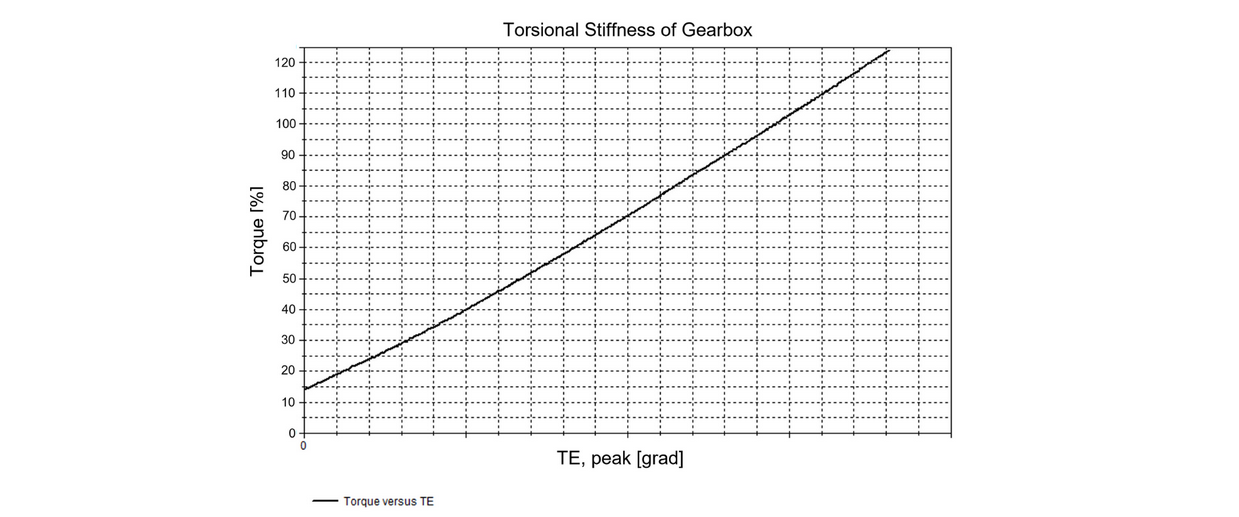
Image of the analyses in the time domain Wind turbine gearbox - Torsional Stiffness of Gearbox

Analyses in the time domain

Dynamic angle of twist between gearbox input and output shaft

Load-dependent gearbox stiffness
Speed-independent vibration development and structure-borne noise emissions
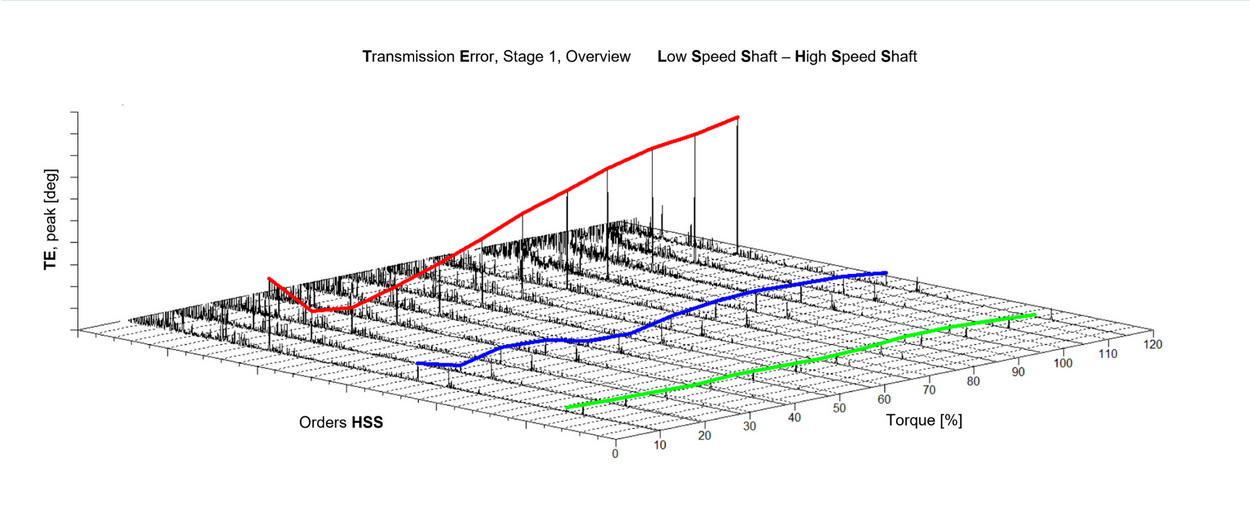
Image analyses in the spectral range - Transmission Error

Analyses in the spectral range

Analysis of the tooth mesh by forming order or frequency spectra.

Visualisation of 3D sequences by linking the spectra from several individual measurements, e.g. via load or speed.

Formation of 2D sectional representations via load or speed for the selection of individual orders or frequencies.

2D visualisation for investigating correlations between transmission errors and structure-borne noise emissions.

Transmission error (TE)

Every gearbox and the individual parts installed in it are subject to manufacturing tolerances that vary depending on the intended use and location of the assembly.

These manufacturing tolerances in combination with:

temperature and load-dependent component elasticities and
assembly influences

the transmission function of the rotary motion and torque deviates from the ideal transmission function.
This phenomenon is referred to astransmission error (TE).
Analysis and measurement technology

Both design-related influences - such as differences between spur gears and planetary gears - and meshing errors can be analysed in detail using suitable measurement technology.

Powerful analysis software can be used to analyse:

Generateorder and frequency spectra in 2D and 3D visualisation
Recognisecorrelations between transmission errors and structure-borne noise emissions

High-resolution incremental sensors are applied to the gearbox input and output shafts to record the measurement data.
Causes and effects

The more complex the structure of a gearbox - i.e. the more gear stages, shafts, gears and bearings it contains - the greater the sum of the individual transmission errors.

The consequences of these errors manifest themselves in

Increased macroscopic and microscopic wear on components and surfaces
Emission of structure-borne noise and noise that is acoustically perceptible

It is therefore essential to measure the transmission error in order to quantify and evaluate each individual gear stage.
Compensation of measurement errors

Eccentricities or shaft impacts can cause measurement errors. The use of two speed sensors offset by 180° is therefore highly recommendedfor large shaft diameters .

This configuration allows measurement errors to be compensated for directly in the analysis software.
Various sensor types are available depending on the shaft diameter :

One-piece hollow shaft encoders

Two-partsensors with a separate sensor head and a magnetic tape that spans the shaft

Ideally, additional speed sensors are installed on the intermediate
installed on the intermediate shafts inside the gearbox. At the same time, structure-borne noise is measured using acceleration sensors at different positions in the gearbox.
gearbox.

Customised solution required?

ROTEC ENGINEERING offers customised measurement technology solutions and complete project management.

#FAQs

Frequently Asked Questions

Have Question? We are here to help

What does the ROTEC solution for rotation analysis look like and what does RAS mean?

The ROTEC Rotational Analysis System (RAS) has been used for more than 30 years by users in the mechanical engineering, automotive, power generation and motorsport industries to comprehensively analyse rotating components.

With its unique measurement method using a 12.3 GHz counter card and a strictly angle-based approach to rotational speed detection and analysis, the RAS system offers users an unrivalled advantage.

ROTEC offers not only optical and magnetic speed sensors including signal conditioning adapters, but also the modular measuring system RASdelta as well as specialised and user-friendly software for measurement and analysis. This enables a complete solution from a single source. The ROTEC measurement technology products are perfectly harmonised with each other and deliver meaningful results within a very short time after the uncomplicated setup of the measurement chain.

Thanks to the angle-based approach to speed measurement, problems such as sensor vibrations can be recognised after the first measurement and rectified immediately. This effectively prevents costly incorrect measurements.

Our team of experts at ROTEC ENGINEERING, consisting of long-standing users, will be happy to assist you with challenging tasks.

Are there options for customising the measuring systems and software?

The ROTEC RASdelta front end is a versatile modular measurement system that can be customised with 8 or 16 measurement cards to meet your specific measurement requirements.

Our RAS software offers you a comprehensive modular system for analysing rotating components and complex systems. It is an effective tool for mechanical engineers and requires no programming knowledge to perform measurements or analyses.

If you have specific metrological questions, our experienced ROTEC ENGINEERING consulting team will be happy to support you.

Does ROTEC offer other services in addition to the measuring systems, e.g. customised consulting or project support?

ROTEC not only offers speed sensors, signal conditioning, measurement systems (DAQ) and measurement and evaluation software, but also engineering and consulting services.

Our services include the design of measuring points in CAD, the mechanical processing of components, the application and calibration of sensors, the execution of measurement tasks and the evaluation of measurements according to our customers' requirements, including the presentation of the results. The ROTEC ENGINEERING team can also realise sub-projects as part of project support.

Is there training or technical support for commissioning and integrating the measuring systems?

In addition to our annual ROTEC Training Week, which is held in both German and English, we also offer customised training courses for users. These training courses are specially tailored to your individual application of the ROTEC measuring system and include practical demo measurements in your environment in addition to the theoretical basics and a detailed presentation of the software. This ensures that future users are optimally prepared for your specific application.

Furthermore, we are happy to support you in the commissioning of new measuring systems to enable you to familiarise yourself with the settings and possibilities of the RAS software as quickly as possible.

How is support ensured and are there self-help options?

In addition to our sales and support team in Munich, which serves the Central European market directly from here, ROTEC also cooperates with local partners in many global markets. These partners support local users in all matters relating to ROTEC measurement technology, first-level support and sales enquiries with trained personnel.

Our customers around the world appreciate the proximity of our sales and support teams, as this enables us to guarantee effective support even for short-term questions.

In addition to personal contact, ROTEC also offers an extensive knowledge database for self-help. Please register for our knowledge database to obtain detailed information on measuring and analysing torsional vibrations, transmission errors and valve systems, among other things.