

ROTEC · Measurement applications
Torsional vibration analysis of turbines
Investigate vibration angle, angular velocity and dynamic torsion during run-up, coast-down and continuous operation.
Measurement task and objective
Investigate torsional behaviour associated with turbine loading, mechanical damage risks and resonance regions. Measurement results support the assessment of turbine operation and the effects of grid-frequency fluctuations.
ROTEC ENGINEERING can provide sensor installation, on-site measurement, analysis and evaluation within the agreed project scope.

Frequency spectra and spectrograms
Sequences of high-resolution frequency spectra and spectrograms help investigate dynamic behaviour. Achievable frequency resolution depends on the measurement duration and analysis settings.
- Individual speed measurement points: vibration angle and angular acceleration.
- Differences between two measurement points: angle of twist and dynamic torsion.
- Small-angle vibration analysis, with achievable resolution dependent on the measurement chain and operating conditions.
- Identification of resonance regions during run-up and coast-down.
Torsional vibration in turbines
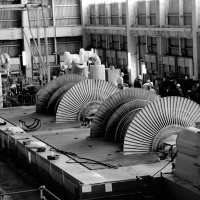
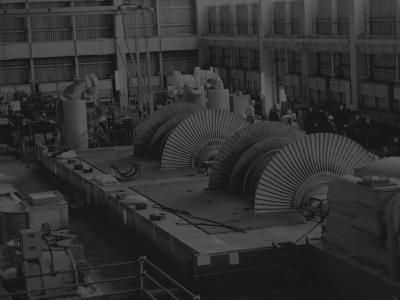
Power-generation turbines can be gas or steam turbines. Their rotating assemblies store substantial kinetic energy in operation, making the assessment of dynamic behaviour important.
The source discusses the development of larger, more efficient rotating machines and the resulting need to understand their torsional response.

Speed and torsion measurement
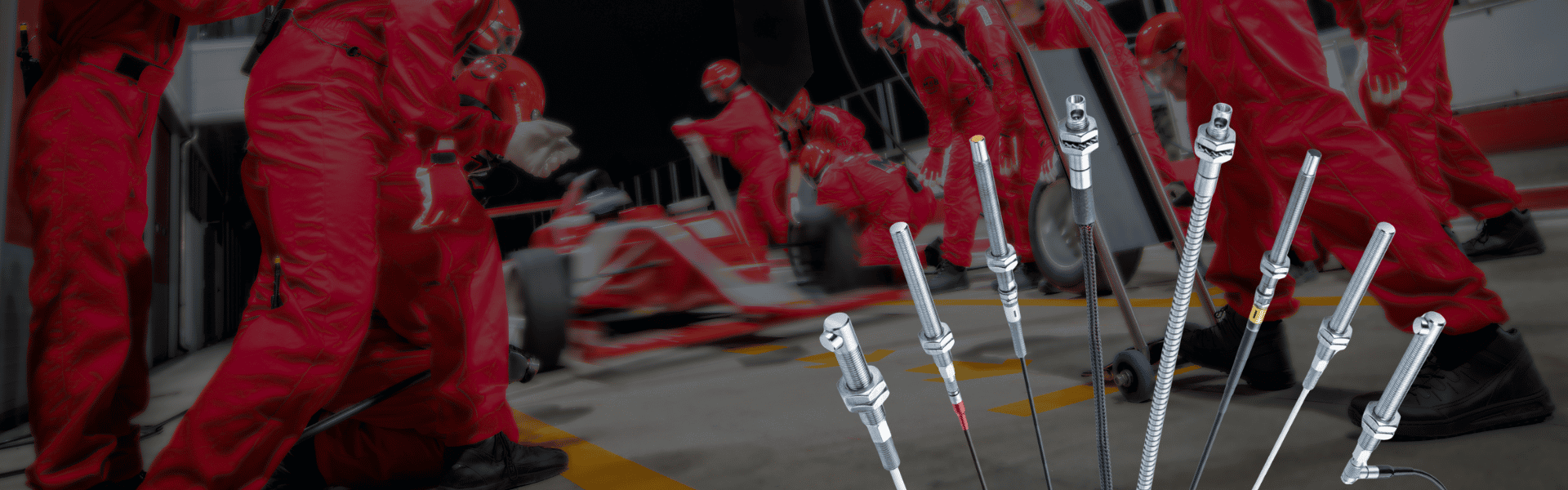
Speed is commonly measured using magnetoresistive sensors at toothed wheels. Analysis can derive quantities such as vibration angle and angular velocity.
Measuring the angle of twist between the two ends of a rotor supports the investigation of dynamic torsion during operation. Long-term measurements provide information on behaviour under different load conditions associated with the power grid.

Critical vibration and operating conditions
Critical torsional vibration can occur during planned run-up and shutdown around maintenance outages, as well as in continuous operation. Mechanical damage, including shaft failure, is a potential consequence of excessive loading.
Grid-frequency fluctuations, feedback effects and system natural frequencies are relevant to the investigation. Torsional analysis helps identify operating conditions that require closer assessment; it does not by itself guarantee safe operation or prevent failure.
Questions and answers
What is RAS, and what does the ROTEC rotational analysis solution include?
The ROTEC Rotational Analysis System (RAS) is used to analyse rotating components in mechanical engineering, automotive development, power generation and motorsport. It combines high-resolution counter-based acquisition with an angle-based approach to rotational speed measurement and analysis.
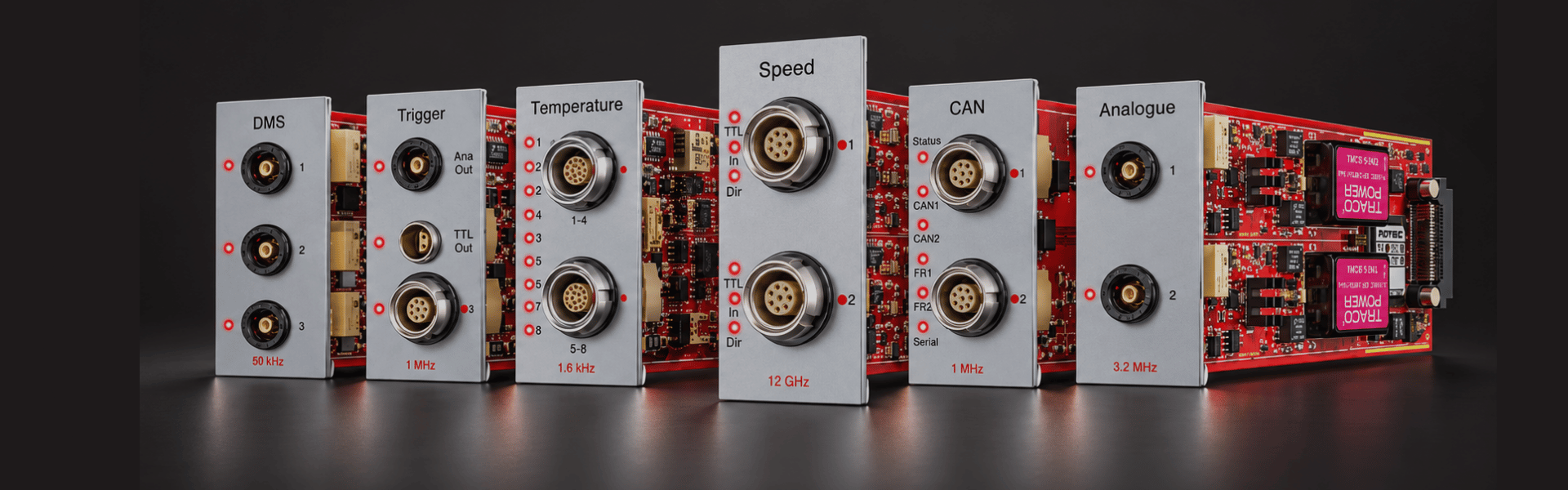
The measurement chain includes optical and magnetic speed sensors, signal-conditioning adapters, the modular RASdelta measurement system and specialised measurement and analysis software. The angle-based approach can help identify sensor vibration and other measurement influences during evaluation. ROTEC ENGINEERING supports demanding measurement tasks.
Can the measurement system and software be configured for a specific application?
RASdelta is a modular measurement front end. The source describes configurations with 8 or 16 measurement cards, selected to suit the measurement task. RAS software provides tools for analysing rotating components and complex systems without requiring users to write their own measurement or analysis programs.
ROTEC ENGINEERING can advise on application-specific measurement questions and the selection of a suitable configuration.
Does ROTEC also provide engineering and project support?
Alongside sensors, signal conditioning, data acquisition and analysis software, ROTEC provides engineering and consulting services. These include measurement-point design in CAD, component machining, sensor installation and calibration, measurement execution, data evaluation and presentation of results.
Project support can cover individual work packages as well as a wider measurement project, according to the agreed scope.
Is training available for commissioning and using a measurement system?
ROTEC offers its Training Week in German and English as well as application-specific user training. Training can combine measurement principles, a detailed introduction to the software and practical demonstration measurements in the user’s environment.
Support is also available when commissioning a new system and becoming familiar with the settings and functions of RAS software.
How can users access support and self-help information?
The Munich sales and support team serves Central Europe, supported by local partners in other markets. Partners assist with measurement technology, first-level support and sales enquiries.
ROTEC also provides a knowledge base with registration-based access to information on topics including torsional vibration, transmission error and valve train analysis. Contact the team to discuss the appropriate support route for your application.
Discuss your measurement task with ROTEC
ROTEC ENGINEERING supports measurement-system selection, installation, testing and evaluation to suit your application.