Rotational speed fluctuation
A measurement at a single position examines how angular velocity or angular position changes over time.
This can be used to determine rotational irregularity, angular velocity, angular acceleration and order components.


High-resolution rotational speed, angle and torsional vibration measurement for engines, gearboxes, couplings, shafts and complete powertrains.
Torsional vibration involves periodic or transient changes in the angular velocity of rotating components.
Real machines and drive systems are subject to time-varying torque, stiffness, inertia and external excitation.
Analysing these fluctuations provides insight into the dynamic behaviour of engines, gearboxes, couplings, shafts, generators and complete powertrains.
The terminology is often used interchangeably. For measurement, it is useful to distinguish what is observed at one position from the relative motion between positions.
A measurement at a single position examines how angular velocity or angular position changes over time.
This can be used to determine rotational irregularity, angular velocity, angular acceleration and order components.
Measurements at two or more positions along a powertrain compare angular motion between those positions.
This makes it possible to investigate dynamic twist in shafts, couplings, gearboxes and complete powertrains.
High-resolution torsional vibration measurement is based on determining the angular position of a rotating component over time as accurately as possible.
Gears, toothed discs, incremental encoders, magnetic encoders or optical targets produce defined angular events.
A sensor detects the signal edges. The measurement system determines their timing and uses this to calculate instantaneous angular velocity.
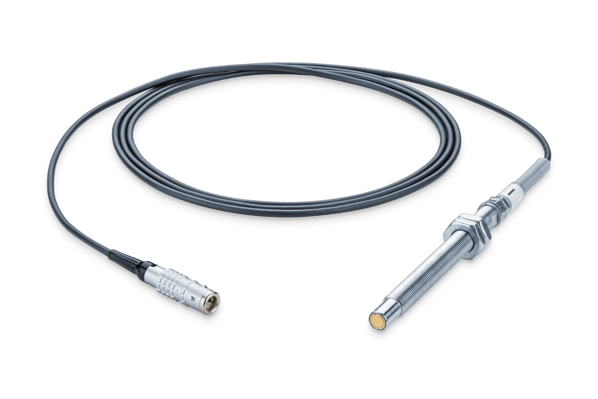
Mean rotational speed is not the only factor in torsional vibration measurement. The timing precision of each individual signal edge also matters.
Higher time resolution in counter-based measurement can, in principle, resolve smaller changes in the timing of the rotational speed signal.
Reliable results depend on sensors, signal conditioning, data acquisition, analysis and an understanding of the mechanical system working together.
Suitable sensors and careful installation provide the basis for dependable measurement data and analysis.
Appropriate signal conditioning reduces interference and prepares the relevant information for data acquisition.
RASdelta acquires rotational speed, analogue, CAN and other supported measurement quantities synchronously on a common timebase.
RAS software visualises and analyses measurement data in the time, frequency and order domains.
Engineering expertise combines measurement data, system knowledge and experience to support technical assessments and recommendations.
High-resolution rotational speed acquisition, synchronous analogue measurement and specialist analysis for rotating machinery and powertrains.
High-resolution rotational speed, angle and torsional vibration measurement with synchronous acquisition of additional measurement quantities.
Specialist analysis of dynamic measurement data for rotating systems and powertrains.
From combustion engines, electric drives and gearboxes to marine, wind energy and motorsport applications.
Crankshaft dynamics, firing orders, resonances, auxiliary drives, couplings and dampers.
Analyse rotational speed, current, voltage, torque and vibration signals together.
Gear mesh orders, transmission error, load dependence and input/output dynamics.
Consider the engine, coupling, gearbox, shaft line and propeller as a complete dynamic system.
Investigate gearbox dynamics, transmission error and load-dependent gear meshing phenomena.
Dynamic analysis at high rotational speeds and during rapid load changes.
Not every organisation needs its own torsional vibration measurement system. ROTEC can carry out complete measurement projects, from defining the measurement positions to interpreting and documenting the results.
Torsional vibration is determined by measuring angular position, or the timing of defined angular events, at high resolution. The time intervals allow angular velocity and its fluctuations to be calculated.
Depending on the application, rotational speed, available space and target, suitable options may include magnetoresistive sensors, GMR sensors, encoders, optical sensors or laser tachometers.
An order expresses frequency relative to the rotational frequency. The first order is the rotational frequency itself; the second order is twice that frequency.
Order tracking examines signal components relative to rotational speed. This allows speed-synchronous phenomena to be followed as rotational speed changes.
Yes. Synchronous acquisition allows rotational dynamics to be correlated with acceleration, torque, force, pressure or other supported measurement quantities.
A single-position measurement describes fluctuations in angular velocity at that position. A multi-position torsional measurement examines the relative angular motion between at least two positions.
Our measurement and engineering specialists can work with you to assess a suitable measurement setup for your application.
High-resolution rotational speed, angle and torsional vibration measurement for engines, gearboxes, couplings, shafts and complete powertrains.
Torsional vibration involves periodic or transient changes in the angular velocity of rotating components.
Real machines and drive systems are subject to time-varying torque, stiffness, inertia and external excitation.
Analysing these fluctuations provides insight into the dynamic behaviour of engines, gearboxes, couplings, shafts, generators and complete powertrains.
The terminology is often used interchangeably. For measurement, it is useful to distinguish what is observed at one position from the relative motion between positions.
A measurement at a single position examines how angular velocity or angular position changes over time.
This can be used to determine rotational irregularity, angular velocity, angular acceleration and order components.
Measurements at two or more positions along a powertrain compare angular motion between those positions.
This makes it possible to investigate dynamic twist in shafts, couplings, gearboxes and complete powertrains.
High-resolution torsional vibration measurement is based on determining the angular position of a rotating component over time as accurately as possible.
Gears, toothed discs, incremental encoders, magnetic encoders or optical targets produce defined angular events.
A sensor detects the signal edges. The measurement system determines their timing and uses this to calculate instantaneous angular velocity.
Mean rotational speed is not the only factor in torsional vibration measurement. The timing precision of each individual signal edge also matters.
Higher time resolution in counter-based measurement can, in principle, resolve smaller changes in the timing of the rotational speed signal.
Reliable results depend on sensors, signal conditioning, data acquisition, analysis and an understanding of the mechanical system working together.
Suitable sensors and careful installation provide the basis for dependable measurement data and analysis.
Appropriate signal conditioning reduces interference and prepares the relevant information for data acquisition.
RASdelta acquires rotational speed, analogue, CAN and other supported measurement quantities synchronously on a common timebase.
RAS software visualises and analyses measurement data in the time, frequency and order domains.
Engineering expertise combines measurement data, system knowledge and experience to support technical assessments and recommendations.
High-resolution rotational speed acquisition, synchronous analogue measurement and specialist analysis for rotating machinery and powertrains.
High-resolution rotational speed, angle and torsional vibration measurement with synchronous acquisition of additional measurement quantities.

Specialist analysis of dynamic measurement data for rotating systems and powertrains.
From combustion engines, electric drives and gearboxes to marine, wind energy and motorsport applications.
Crankshaft dynamics, firing orders, resonances, auxiliary drives, couplings and dampers.
Analyse rotational speed, current, voltage, torque and vibration signals together.
Gear mesh orders, transmission error, load dependence and input/output dynamics.
Consider the engine, coupling, gearbox, shaft line and propeller as a complete dynamic system.
Investigate gearbox dynamics, transmission error and load-dependent gear meshing phenomena.
Dynamic analysis at high rotational speeds and during rapid load changes.
Not every organisation needs its own torsional vibration measurement system. ROTEC can carry out complete measurement projects, from defining the measurement positions to interpreting and documenting the results.
Torsional vibration is determined by measuring angular position, or the timing of defined angular events, at high resolution. The time intervals allow angular velocity and its fluctuations to be calculated.
Depending on the application, rotational speed, available space and target, suitable options may include magnetoresistive sensors, GMR sensors, encoders, optical sensors or laser tachometers.
An order expresses frequency relative to the rotational frequency. The first order is the rotational frequency itself; the second order is twice that frequency.
Order tracking examines signal components relative to rotational speed. This allows speed-synchronous phenomena to be followed as rotational speed changes.
Yes. Synchronous acquisition allows rotational dynamics to be correlated with acceleration, torque, force, pressure or other supported measurement quantities.
A single-position measurement describes fluctuations in angular velocity at that position. A multi-position torsional measurement examines the relative angular motion between at least two positions.
Our measurement and engineering specialists can work with you to assess a suitable measurement setup for your application.